


Shipping a 40 foot container is a crucial aspect of modern global trade, serving as a key link in the logistics chain for various industries. These large containers can efficiently transport everything from household goods to large-scale industrial equipment across the world. Understanding the costs involved is vital for businesses striving to optimize their operations and budget effectively. Here are some key points to consider:
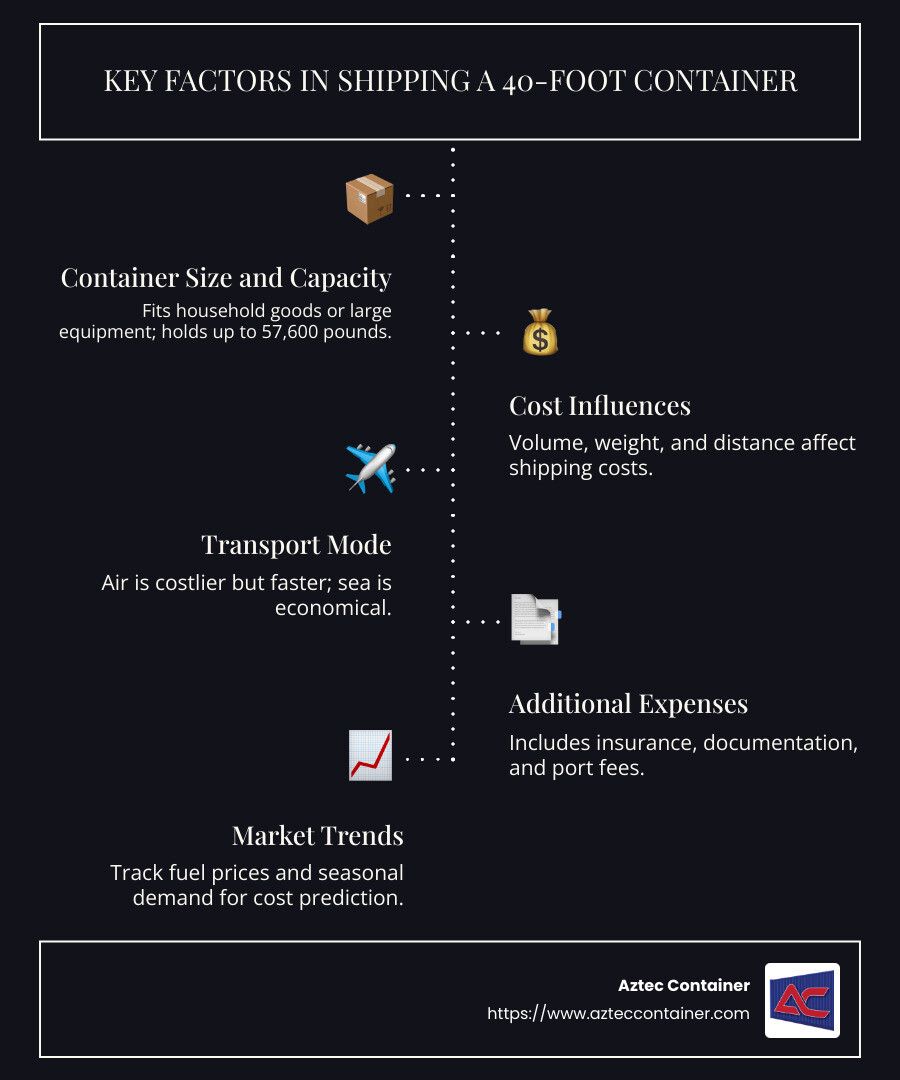
- Importance of a 40-Foot Container: Ideal for shipping the contents of a four-bedroom house or large equipment.
- Capacity: Can hold around 57,600 pounds of goods.
- Cost Factors:
- Volume and Weight: Larger, heavier shipments cost more.
- Distance: Longer shipping distances increase costs.
- Transport Mode: Air is more expensive but faster compared to sea shipping.
- Additional Expenses: Include insurance, documentation fees, and port charges.
- Trend Analysis: Keep an eye on fuel prices and seasonal demand fluctuations to predict cost changes.
As Steve Hyndman, Vice President of Aztec Container, I bring over 30 years of experience in the industry. Our company prioritizes quality and customer service, helping clients steer the complexities of shipping a 40 foot container with ease and efficiency.
Know your shipping a 40 foot container terms:
– moving 40ft shipping container
– average cost of 40ft shipping container
– how many 40 foot containers fit on a cargo ship
Understanding Shipping Costs
When it comes to shipping a 40 foot container, understanding the various costs involved is crucial. These costs can vary significantly based on several factors like freight rates, supply and demand, and shipping routes. Let’s break these down:
Freight Rates
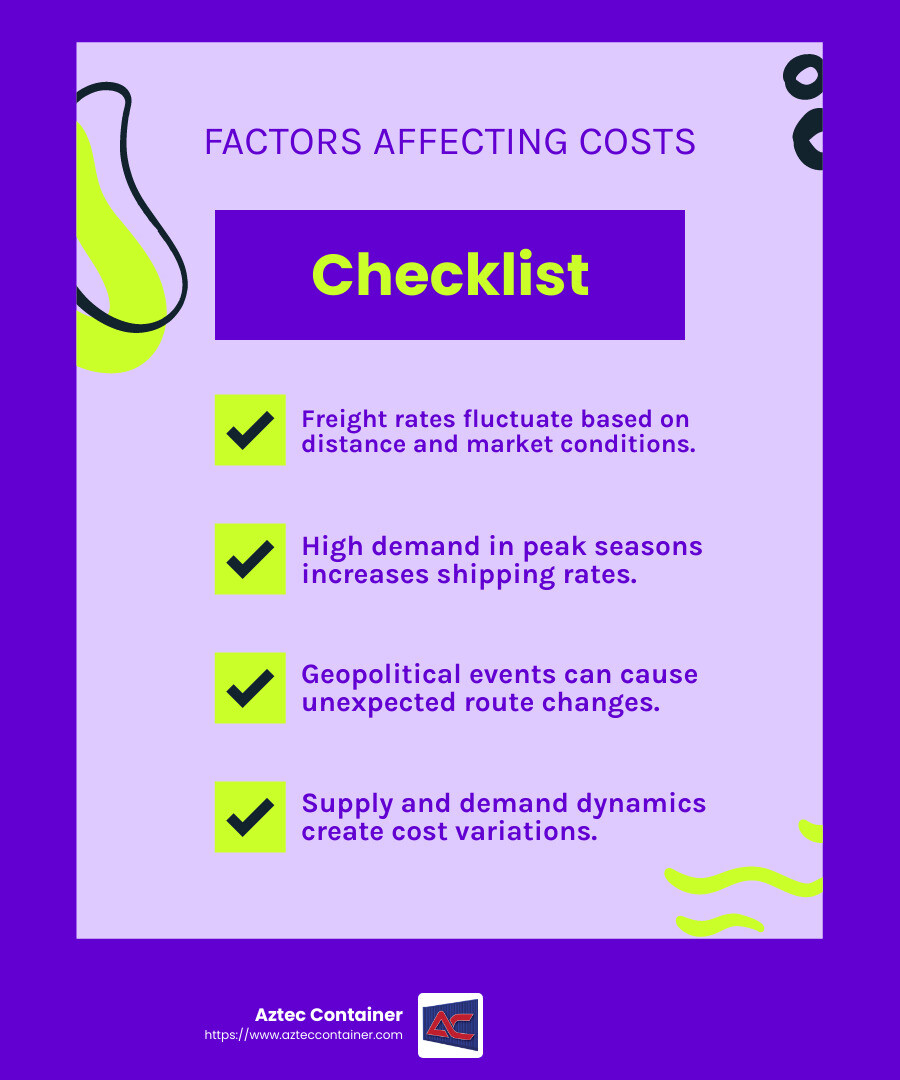
Freight rates are the charges applied for transporting goods over a specific distance. These rates are not static and can fluctuate due to various factors. For instance, the Drewry World Container Index showed spot rates for shipping from Shanghai to New York reaching nearly $10,000 at one point, driven by geopolitical events and demand fluctuations.
Supply and Demand
Supply and demand play a huge role in determining shipping costs. When demand for shipping is high, such as during peak seasons like back-to-school or holiday periods, rates tend to increase. Conversely, when demand drops, rates can decrease. As noted by industry experts, the market can sometimes feel like a “bubble,” with prices soaring due to temporary factors like geopolitical tensions or natural disasters.
Shipping Route
The route taken by the container also affects costs. Routes with higher traffic and better infrastructure tend to be less expensive. However, unexpected events like the Houthi rebels’ attacks can force ships to take longer routes, increasing costs. For example, avoiding the Suez Canal due to safety concerns can lead to longer trips around Africa, which in turn raises the shipping rates.
In summary, understanding the interplay between freight rates, supply and demand, and shipping routes is essential for managing shipping costs effectively. This knowledge helps businesses and individuals make informed decisions, ensuring they get the best value when shipping a 40 foot container.
Shipping a 40 Foot Container: Key Considerations
When it comes to shipping a 40 foot container, there are a few key considerations to keep in mind. These include understanding the container size, choosing the right transport method, and knowing how Aztec Container can help.
Container Size
A 40-foot container, also known as an FEU (Forty-foot Equivalent Unit), is large enough to hold the contents of a four-bedroom home. It measures 40 feet in length, 8 feet in width, and 8.5 feet in height, with a payload capacity of 61,200 pounds. This makes it ideal for moving large amounts of goods, whether you’re relocating a household or shipping commercial products.
Transport Methods
Choosing the right transport method is crucial for shipping a container. The most common methods include:
- Sea Freight: Ideal for international shipping, sea freight is cost-effective but slower than air freight. It’s the most common method for transporting 40-foot containers across oceans.
- Rail Transport: A good option for long-distance land transport, especially in countries with well-developed rail networks. It offers a balance between cost and speed.
- Truck Transport: Often used for the final leg of delivery, trucks provide door-to-door service. They are flexible and can deliver containers to locations not accessible by rail or ship.
Aztec Container
Aztec Container is a trusted provider for purchasing or renting 40-foot containers. With locations in states like Arizona, California, and Texas, they offer a range of options to suit different needs. Whether you need a new container or a cost-effective used one, Aztec Container provides durable, wind and watertight containers that can be customized for various uses.
Aztec Container also ensures prompt delivery and doesn’t burden customers with hidden fees. They focus on providing value and professionalism, making them a reliable partner for your container needs.
By understanding these key considerations, you can make informed decisions when planning to ship a 40-foot container. This ensures you choose the right container, transport method, and provider, leading to a smooth and cost-effective shipping experience.
Cost Breakdown by Destination
Shipping a 40-foot container involves more than just the physical movement of goods. Costs can vary significantly based on the destination. Let’s explore the cost breakdown for shipping from Asia to the US, Europe, and Oceania.
Asia to US
Shipping routes from Asia to the United States are among the busiest in the world. This means that supply and demand play a significant role in determining costs. For instance, a 40-foot container from Shanghai to Los Angeles can cost around $2,926, but these rates can fluctuate based on the season and economic conditions.
Key Factors:
- Busy Seasons: During peak times like the holiday season, rates can spike due to increased demand.
- Port Congestion: Delays at major ports can lead to additional fees and longer transit times.
Europe
Shipping a container from Asia to Europe is another major trade route. The cost of shipping a 40-foot container from Shanghai to Bremerhaven, Germany, is approximately $2,620. However, recent trends show that transit times are increasing due to ships diverting around Africa instead of passing through the Suez Canal, impacting costs.
Key Factors:
- Route Changes: Political and safety considerations, like avoiding the Red Sea, can lead to longer routes and higher costs.
- Economic Factors: Trade policies, such as tariffs, can also influence shipping rates.
Oceania
For destinations like Australia, shipping a 40-foot container from Shanghai to Melbourne costs about $2,050. Oceania often experiences different trends compared to the US and Europe due to its geographic isolation.
Key Factors:
- Distance: The sheer distance from Asia can make shipping to Oceania more expensive.
- Port Infrastructure: Limited port capacity can lead to higher costs and longer wait times.
Understanding these cost breakdowns is crucial for planning your logistics effectively. Whether you’re shipping to the US, Europe, or Oceania, being aware of the factors that influence shipping costs can help you budget more accurately and avoid unexpected expenses.
How to Calculate Container Shipping Costs
Calculating the cost of shipping a 40-foot container involves several components. Let’s break it down to make it easier to understand.
Online Calculators
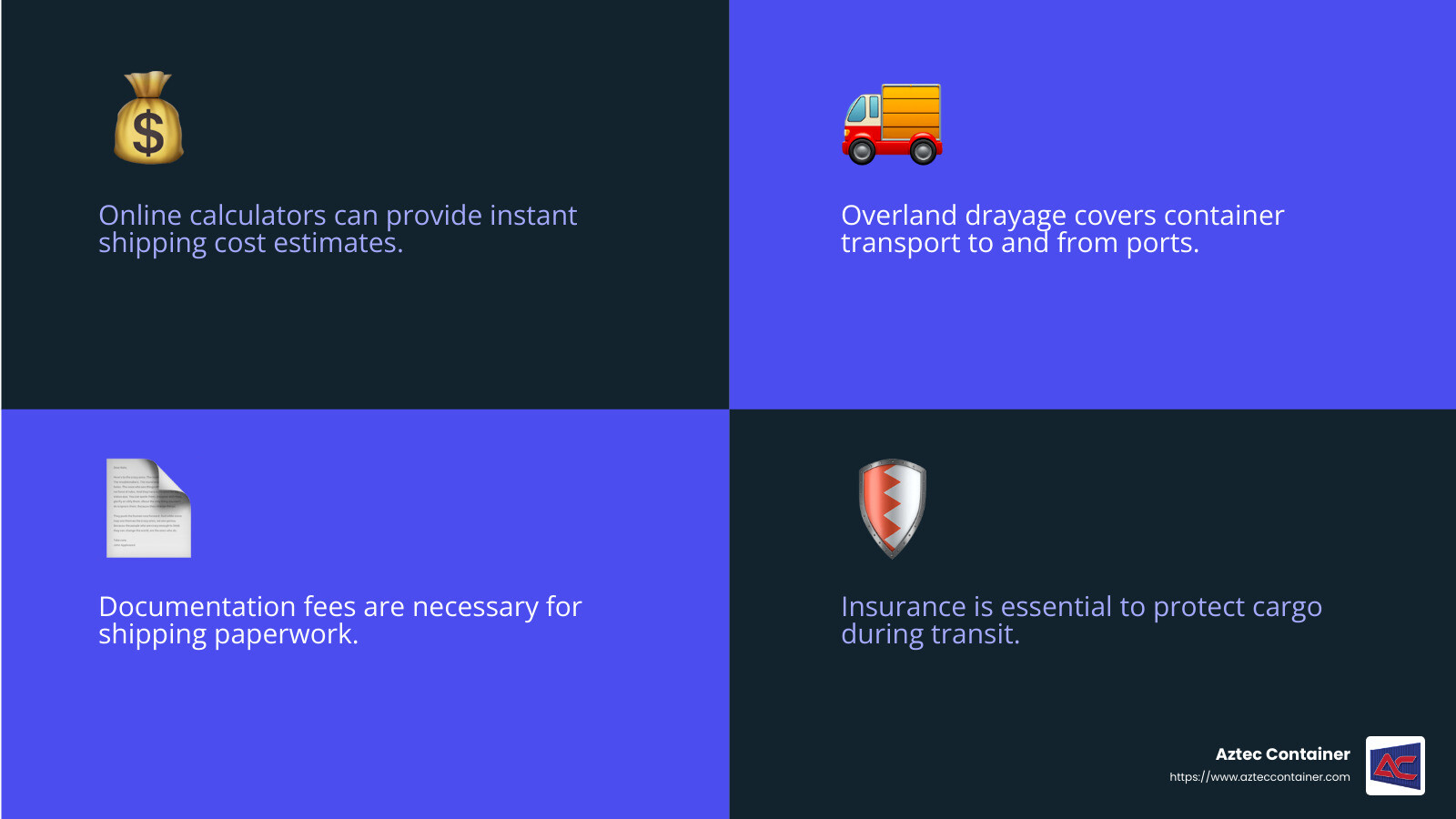
One of the most efficient ways to estimate your shipping costs is by using online calculators. These tools consider various factors like shipping routes, container sizes, and current freight rates. For example, the Freightos website offers a free calculator that uses data from the world’s largest freight rate database. Just input your shipment details, and you’ll get an instant estimate.
Additional Costs
Shipping a container isn’t just about the base freight rate. There are other costs to consider:
- Overland Drayage: This is the cost of transporting containers to and from ports using trucks or rail.
- Documentation Fees: These cover the preparation and processing of necessary shipping documents.
- Port-to-Door Services: If you need your container delivered directly from the port to a specific location, this service incurs additional costs.
Insurance
Insurance is another critical factor in calculating shipping costs. It protects your cargo from loss or damage during transit. While it adds to the overall cost, having insurance can save you from significant financial loss in case of accidents or unexpected events.
Putting It All Together
To accurately calculate the total cost of shipping a 40-foot container, consider using an online calculator to get a base rate. Then, add in any additional costs and insurance. This approach will give you a comprehensive view of what to expect financially, helping you plan your logistics with confidence.
In the next section, we’ll address some frequently asked questions about shipping a 40-foot container, including price ranges and transportation methods.
Frequently Asked Questions about Shipping a 40ft Container
When it comes to shipping a 40-foot container, several questions often arise. Let’s tackle some of the most common ones.
What is the price of a 40-foot container?
The price of a 40-foot container can vary significantly based on several factors. New containers, often called “New One Trip Containers,” tend to be more expensive due to their excellent condition. These are typically manufactured overseas and used only once to ship cargo to the United States. On the other hand, used containers are more affordable but might have dents or surface rust. The choice between new and used depends on your budget and what you value more—appearance or cost savings.
How do you transport a 40-foot shipping container?
Transporting a 40-foot shipping container requires careful planning and the right equipment. One of the most common methods is using a tractor trailer. These trailers are specifically designed to handle the weight and size of large containers. The process usually involves loading the container onto the trailer at the port and then transporting it to its final destination. In some cases, rail transport might be used for longer distances, especially when moving goods across the country.
How many bedrooms can fit in a 40ft container?
A 40-foot container is surprisingly spacious and can hold the contents of a four-bedroom home. This makes it an excellent option for those looking to move a large household or even for businesses needing to ship significant amounts of goods. The container’s dimensions—39.5 feet in length, 7.7 feet in width, and 7.9 feet in height—allow it to accommodate between 20-21 standard pallets, providing ample space for furniture, appliances, and other household items.
Understanding these aspects of shipping a 40-foot container can help you make informed decisions and ensure a smooth logistics process.
In the next section, we’ll dig deeper into the cost breakdown by destination, focusing on routes from Asia to the US, Europe, and Oceania.
Conclusion
Shipping a 40-foot container is a complex process that requires careful planning and consideration of various factors. From understanding freight rates and choosing the right transport methods to calculating additional costs such as insurance, there’s a lot to keep in mind. But don’t worry—Aztec Container is here to make it easier for you.
At Aztec Container, we specialize in providing customizable solutions for all your shipping container needs. Whether you’re moving across the country or shipping goods internationally, our team can help tailor a solution that fits your specific requirements. With competitive prices, fast delivery, and a wide range of options, we strive to make the process as smooth as possible.
Our containers are not just for shipping—they can be transformed into offices, storage units, or even homes. We offer various modifications, including adding windows, doors, and insulation, to meet your unique needs.
Ready to get started? Check out our 40-foot cargo container options to find the perfect fit for your project. Let us help you steer the costs and logistics of shipping a 40-foot container with confidence and ease.