
Fast Delivery
Competitive Prices
Sales Available Nationwide
Rentals Available in California
Fast Delivery
Competitive Price
Sales Available Nationwide
Rentals Available in California
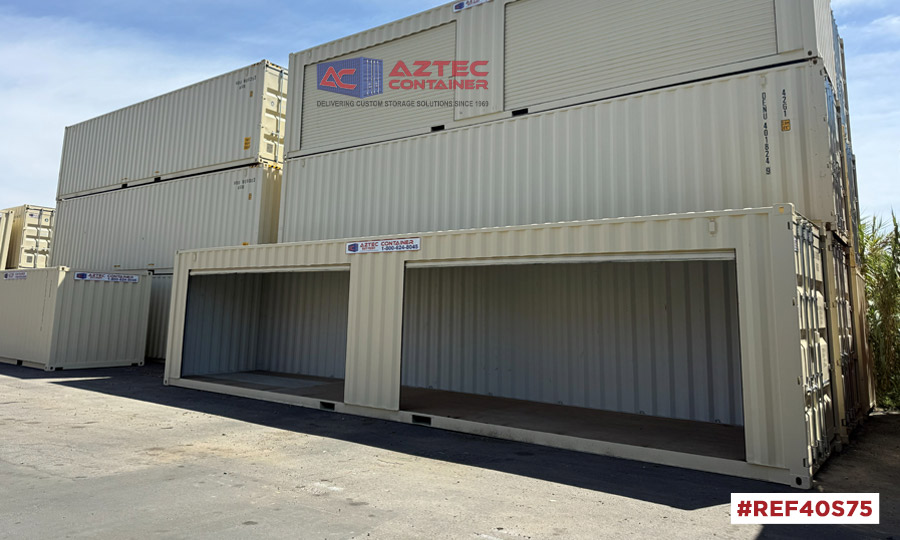
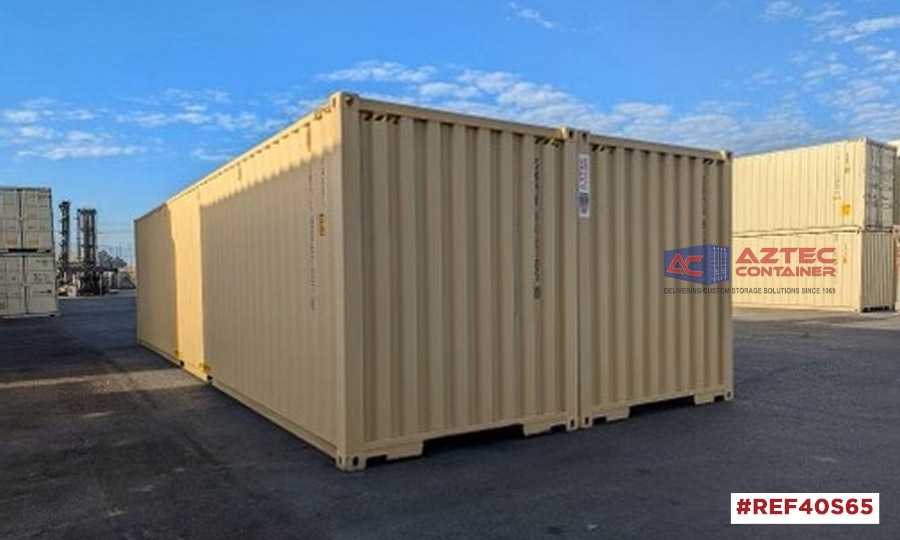
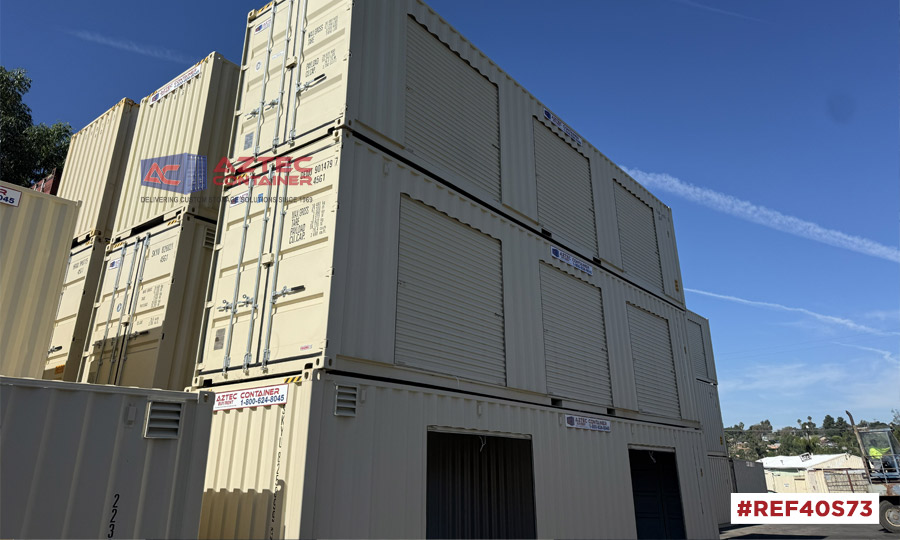
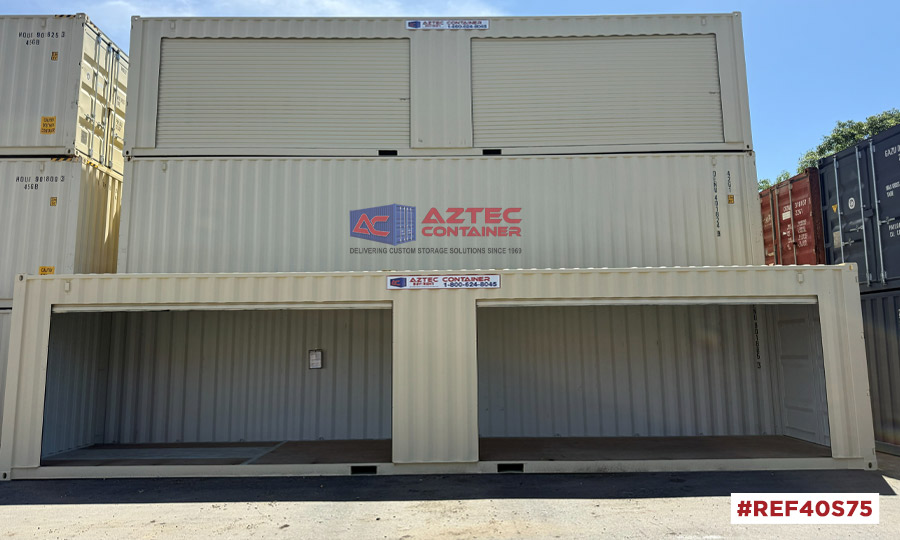
40 Foot Cargo Door Shipping Containers
Get Your Container Quote Now
* Indicates a required field
About 40 Foot Cargo Door Shipping Containers
Our 40-foot dry cargo container is built for strength, space, and long-term performance. The pair of full-height doors at one end opens to the container’s entire width, which makes loading wide pallets, machinery, vehicles, and bulky inventory far easier than a single side door allows.
Each unit is constructed from heavy-gauge Corten steel with a marine-grade plywood floor rated for forklift traffic, so it stands up to demanding job-site and commercial use. Whether you need overflow storage for a warehouse, a secure box for tools and materials, or extra capacity at home, this container handles it.
Sales are available nationwide, and rentals are offered across California. Call 1-800-399-2126 for a quick quote or fill out our online quote form for competitive pricing and dependable service backed by real customer reviews.
Key Features
- Full-width cargo doors: A pair of full-height steel swing doors at one end open to the entire 7’8″ width for easy loading of oversized items.
- Secure locking system: Vertical locking bars, cam-action handles, and a welded lockbox that shrouds your padlock against bolt cutters.
- Heavy-gauge steel build: 8-gauge steel under-frame with 14-gauge corrugated Corten steel wall panels for a rigid, durable shell.
- Forklift-rated flooring: 1‑⅛ inch marine-grade plywood subfloor designed to endure heavy loads and high-traffic use.
- Corner castings: ISO-standard cast corners allow the unit to be stacked and lifted with standard container-handling equipment.
- Built-in ventilation: Passive cargo vents promote air circulation inside the sealed steel body.
- New or used grades: Choose a near-pristine one-trip container or a budget-friendly cargo-worthy used unit.
- Fully customizable: Add personnel doors, windows, roll-up doors, shelving, electrical, partitions, or a custom paint finish.
- Buy or rent: Purchase nationwide, or rent across California to match short- and long-term needs.
Dimensions & Specification
| Measurement Type | Specification |
| External Length | 40 feet |
| External Width | 8 feet |
| External Height | 8 feet 6 inches |
| Internal Length | 39 feet 5 inches |
| Internal Width | 7 feet 9 inches |
| Internal Height | 7 feet 10 inches |
Common Uses of 40 Foot Cargo Door Shipping Containers
These containers work well for a wide range of short- and long-term storage needs, including:
- Job-site storage for tools, materials, and equipment
- Warehouse and retail inventory overflow
- Vehicle, boat, and motorcycle storage
- Residential storage during moves or renovations
- Agricultural, ranch, and landscaping equipment
- Document and records archiving
FAQ's
What’s the difference between a cargo door and a roll-up door container?
A cargo door container has the classic pair of full-height steel doors that swing open at one end — the same doors the box ships overseas with. They open to the entire 7’8″ width and 7’6″ height, so you can load wide pallets, vehicles, or bulky equipment straight in. A roll-up door works more like a garage door that rolls up overhead. People usually choose cargo doors when they want the widest possible opening and the most secure, heavy-duty closure.
How much can I actually fit inside a 40-foot cargo door container?
You get roughly 2,385 cubic feet of space and about 300 square feet of floor. As a rough mental picture, that’s comparable to the contents of a three- to four-bedroom house, or two standard vehicles with room to spare. It’s a popular size for job-site material storage, warehouse overflow, pallet racking, and seasonal inventory.
Is a 40-foot cargo container the same thing as a “conex box”?
Yes — “conex” is just industry shorthand for the same steel intermodal container (the name comes from “container express”). Conex box, cargo container, sea container, and shipping container all refer to the same type of unit. So if a supplier quotes you a ‘40ft conex,’ they’re talking about exactly this product.
Should I buy a new or a used 40-foot container?
What kind of surface should I set a 40-foot container on?
A level, firm, well-drained surface is ideal — concrete, asphalt, compacted gravel, or solid packed dirt all work. Because the box rests on its four corner castings, the ground under those corners is what really matters; an uneven base can make the doors rack and bind. For a 40-footer, plan for a clear footprint of at least 40 ft by 8 ft, plus swing room at the door end.
How secure are the cargo doors?
Quite secure. The doors close with vertical locking bars and cam-style handles that seat into the frame, and each unit includes a welded lockbox — a steel shroud that covers a padlock so bolt cutters can’t reach the shackle. Many customers add a heavy-duty puck lock inside that lockbox for an extra layer. Once shut and locked, a cargo door container is one of the toughest storage options to break into.
Can a 40-foot cargo door container be modified?
Absolutely — the steel shell is essentially a blank canvas. Common modifications include adding personnel (walk-in) doors, windows, roll-up doors, vents, interior partitions, shelving, insulation, lighting, and electrical packages. You can also have it repainted to match your brand or property. Tell us how you plan to use it and we can spec the modifications around that.
How heavy is an empty 40-foot Shipping container, and why does that matter?
An empty 40-foot standard container weighs roughly 8,200 pounds. That matters for two reasons: the ground beneath it needs to support that load plus your contents, and the placement spot has to allow the equipment room to set it down precisely. Knowing the tare weight also helps if you’re calculating total loaded weight against the container’s payload limit.
Do I need a permit to keep a shipping container on my property?
It depends entirely on where you are. Many rural and industrial areas have no restrictions, while some cities, counties, and HOAs have zoning rules about container placement, screening, or duration. It’s always worth a quick call to your local planning or zoning office before you commit, so there are no surprises. Rules vary widely even between neighboring towns.
What’s the difference between a 40-foot standard and a 40-foot high cube?
Height. A standard 40-foot container (the one on this page) is 8’6″ tall on the outside, while a 40-foot high cube is a full foot taller at 9’6″. That extra foot adds roughly 300 cubic feet of capacity and gives you about 8’9″ of interior height — handy for tall equipment, stacked pallets, or building out a comfortable interior.
No matter what type of shipping container you need Aztec Container can help you find the right solution!
Call us at 1-800-399-2126 for a quick quote
Fast Delivery
We work fast to customize your container and deliver it to your job site.
Buy or Rent
Sales available nationwide, rentals available in California.
Custom Built
You can customize your container to fit your exact needs.