


The DIY Guide to Installing Shipping Container Doors
Choosing the Right Door for Your Container
Container door installation is the process of cutting an opening in a shipping container wall, reinforcing it with a steel frame, and fitting a door — whether a personnel door, roll-up door, or double swing door.
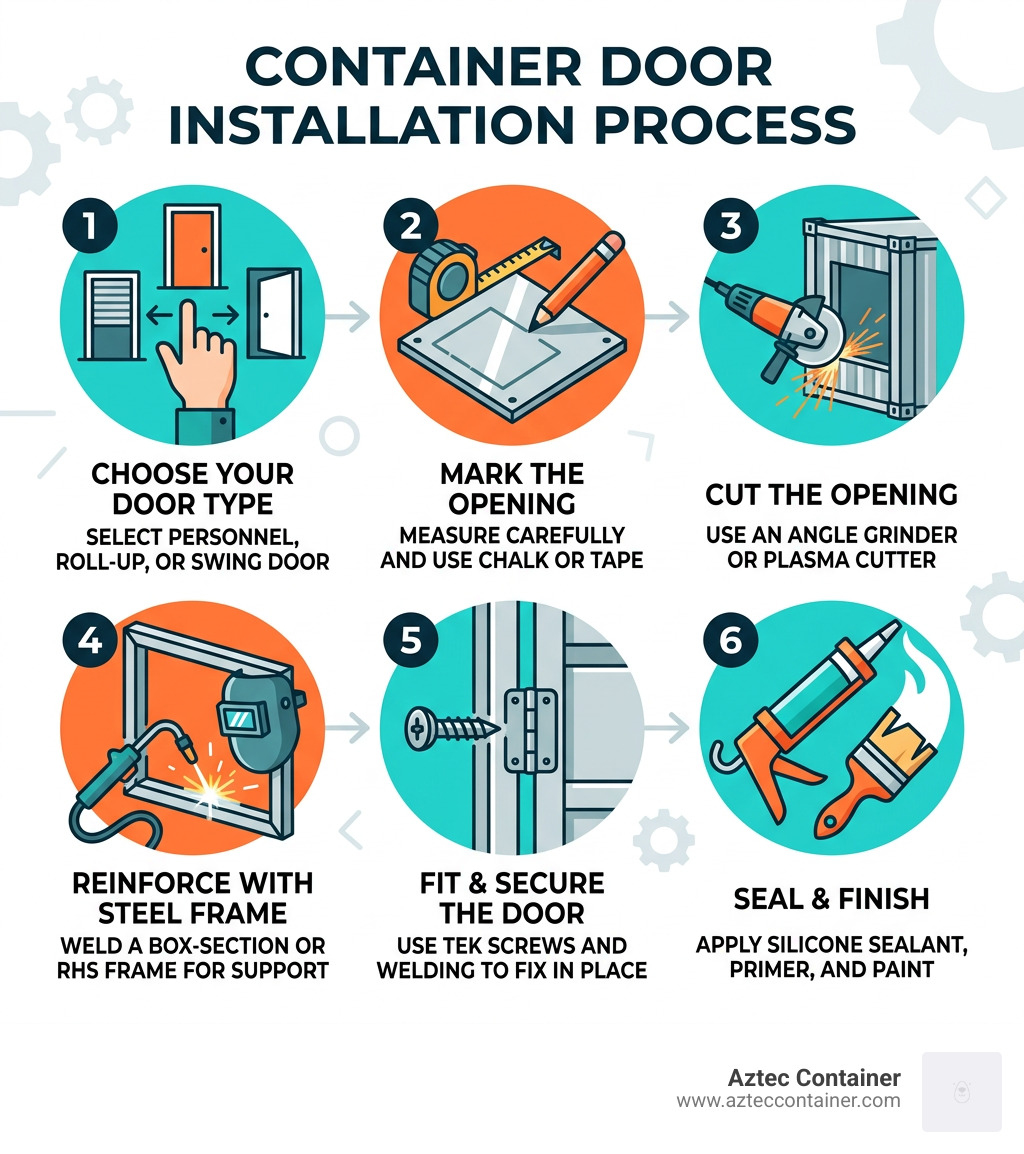
Here’s a quick overview of the process:
- Choose your door type — personnel, roll-up, or swing door
- Mark the opening — measure carefully and mark with chalk or painter’s tape
- Cut the opening — use an angle grinder or plasma cutter
- Reinforce with a steel frame — weld in a box-section or RHS frame for structural support
- Fit and secure the door — use tek screws and welding to fix in place
- Seal and finish — apply silicone sealant, primer, and paint
Shipping containers are built tough — but they’re also surprisingly versatile. With roughly 700,000 abandoned containers sitting in U.S. ports alone, it’s no surprise that more businesses and builders are repurposing them as storage units, offices, workshops, and pop-up retail spaces. A proper door makes all the difference between a steel box and a functional workspace.
But cutting into a container isn’t as simple as grabbing a saw. Done wrong, it can compromise structural integrity, create leaks, or leave you with a door that won’t close properly. Done right, it gives you a secure, weatherproof entry point that lasts for years.
I’m Steve Hyndman, Vice President of Aztec Container, and I’ve spent over 30 years helping businesses customize containers with doors, ventilation, insulation, and more — making container door installation one of the most common modifications we guide customers through. In this guide, I’ll walk you through everything you need to do the job safely and correctly.
Simple container door installation glossary:
Before you fire up the grinder, you need to decide which door fits your workflow. The type of door you choose dictates how much steel you’ll need to cut and how much reinforcement is required. At Aztec Container, we see everything from simple storage access to high-traffic retail entries.
| Door Type | Best Use Case | Key Benefit |
|---|---|---|
| Personnel (Man) Door | Offices, Workshops, Homes | Easy access, highly secure, insulated |
| Roll-Up Door | ATV/Mower Storage, Warehousing | Saves space, wide opening, easy to operate |
| Double Swing Door | Oversized Cargo, Full-Width Access | Maximum security, original container look |
| Sliding Glass | Cafes, Retail, Modern Offices | Natural light, aesthetic appeal |
Personnel Doors
These are the most common aftermarket additions. Typically 3 to 4 feet wide, they are made of heavy-duty 16-gauge steel. Many feature a honeycomb interior to keep the weight manageable (around 126 lbs) while maintaining incredible strength. For high-use applications, these are the gold standard.
Roll-Up Doors
If you are storing large equipment like tractors or furniture, a roll-up door is a lifesaver. These usually come in 6’, 7’, and 8’ widths. They are popular because they don’t require “swing room” outside the container, making them perfect for tight spaces. You can learn more about 20ft roll-up door containers to see how they integrate into the structure.
Double Swing Doors
Sometimes the standard end doors aren’t enough. We can install an additional set of double swing doors on the opposite end or even the side of the container. This creates a “tunnel” effect or a massive side opening nearly 8 feet wide.
Retrofit Cargo Doors and Custom Mods
For those who want the look and feel of the original container, retrofit cargo doors can be installed anywhere along the side walls. If you have a specific vision, check out more info about custom container modifications to see what’s possible in our modification shops across the Southwest and Western US.
Essential Tools and Materials for Container Door Installation
You wouldn’t try to perform surgery with a butter knife, and you shouldn’t attempt a container door installation without the right gear. Steel containers are made of Corten steel, which is designed to resist corrosion but is also quite tough to cut.

The Toolbox
- Measuring Tape & Permanent Marker: Precision is everything.
- 9” Angle Grinder or Plasma Cutter: The grinder is the DIY standard, but a plasma cutter is faster if you have access to one.
- Welding Set: A MIG welder is typically best for these gauges of steel. Ensure it is properly earthed to the container.
- Spirit Level & Square: Essential for ensuring your door doesn’t stick or sag.
- Clamps: To hold your frame in place while tack welding.
- Power Drill: For fixing the door frame with tek screws.
Materials
- Steel Tubing (RHS/Box Section): Usually 50mm x 50mm or 50mm x 100mm (2″x4″). This is used to create the “goal post” frame that supports the opening.
- Silicone Sealant: For weatherproofing the joints.
- Rust-Resistant Primer & Paint: To protect the raw steel edges after welding.
- The Door Kit: Whether it’s a pre-framed man door or a roll-up kit.
Safety First (PPE)
Installing a door involves flying sparks, heavy steel panels, and intense heat. Always wear:
- Welding helmet and gloves.
- Safety glasses (under the helmet).
- Ear protection (grinders are loud!).
- Steel-toed boots.
- A respirator mask to avoid inhaling paint fumes or metal dust.
Measuring and Marking for Container Door Installation
The “measure twice, cut once” rule is a massive understatement here. Because container walls are corrugated, you aren’t just marking a flat surface.
- Determine Placement: Avoid cutting through the main structural corner posts or the top/bottom rails.
- Account for the Frame: Your cut needs to be slightly larger (usually about 1/4 inch or 2mm gap) than the outer dimensions of your steel reinforcement frame.
- Use Chalk Lines: Use a plumb bob or spirit level to ensure your vertical lines are perfectly straight.
- Painters Tape: Some DIYers find it helpful to run painters tape along the cutting line. It provides a high-visibility guide for the grinder blade.
Reinforcing the Opening with a Steel Frame
This is the most critical step. A shipping container’s strength comes from its skin. When you cut a hole, you weaken that wall. Without a frame, the roof could sag, and the door will eventually pinch and seize.
We recommend a “goal post” frame made of Rectangular Hollow Section (RHS) tubing. This frame adds the necessary rigidity back to the container side.
- Support Plates: It is a great idea to tack weld temporary support plates to the container wall to help hold the frame in place while you align it.
- Tack Welding: Never do a full bead weld immediately. Tack weld the four corners first, check for square, and then proceed with the final welding.
Step-by-Step Guide to Personnel Door Installation
Installing a personnel door (or “man door”) is a rewarding project that typically takes about 2 hours and 50 minutes of active labor.
1. Cutting the Aperture
Once marked, use your 9” angle grinder to cut the opening. Pro tip: If the container is heavily painted, grind off the paint along the cut line first. This prevents the paint from melting and creating a mess (or toxic fumes). Have a partner help you support the metal panel as you finish the cut so it doesn’t fall inward and damage the floor—or your toes!
2. Removing Sharp Edges
After the panel is out, use a smaller grinder or a file to smooth the edges. You want a flat surface free of burrs. This ensures the steel frame sits flush against the container wall.
3. Fitting the Frame
Slide your pre-fabricated steel frame into the opening. This is where those clamps come in handy. The frame should be flush with the exterior wall.
4. Squaring and Tack Welding
Check the header (the top piece) with your spirit level. If the container is on uneven ground, you must level the frame relative to gravity, not necessarily the container floor. Tack weld the corners.
5. Final Welding
Once you’ve confirmed the frame is square and level, finish the welds. A common practice is a full weld across the top (to prevent water from sitting) and “stitch welds” (25-30mm every 250mm) down the sides.
6. Installing the Door
Place the door into your new frame. Most kits allow you to fix the door frame to your steel reinforcement using self-tapping (tek) screws.
7. Checking Operation
Before you pack up, test the door. Does it swing freely? Does the deadbolt line up? If it binds, you may need to slightly adjust the frame before the welds cool completely.
Ensuring a Square and Level Container Door Installation
A “plumb” door is a happy door. If the frame is even slightly tilted, the 126-pound door will either swing open on its own or be incredibly difficult to close. Use a spirit level on both the face and the side of the frame.
If you’re struggling to keep the frame square during welding, tack weld a piece of rebar diagonally across the frame corners. This “cross-bracing” keeps the frame from warping as the heat from the weld expands and contracts the metal. You can cut the rebar off once the welds have cooled.
Best Practices for Weatherproofing and Finishing
A hole in a container is an invitation for rust and rain. Proper finishing is what separates a professional container door installation from a “backyard” job.
- Silicone Joints: Once the welding is done and the steel has cooled, apply a high-quality silicone sealant around the entire perimeter where the frame meets the container wall. Use your finger to smooth the bead for a clean, watertight finish.
- Rain Deflectors: We highly recommend installing a “drip ledge” or rain deflector above the door. This simple piece of angled steel directs water away from the top seal, significantly reducing the chance of leaks during heavy storms in places like Arizona or Texas.
- Rust Protection: Raw steel will rust overnight in humid climates. Immediately apply a rust-resistant primer to all welded areas and ground edges.
- Painting: Once the primer is dry, paint the frame to match your container. Pro tip: Mask off the hinges and locks with tape before painting. There is nothing more frustrating than a door that’s “painted shut” or a lock that sticks because of overspray.
- Weather Seals: Check the rubber gaskets around the door. If you are using a roll-up door, ensure the side brushes and bottom seal are tight against the frame to keep out dust and pests.
If you are looking for a container that comes ready-to-go, you might want to explore our 20ft walk-in door containers which feature professional-grade installation from the start.
Frequently Asked Questions about Container Doors
Will installing a door affect the structural integrity of the container?
Yes, it can. Shipping containers are designed as “monocoque” structures, meaning the outer skin carries much of the load. When you cut into the side wall, you are removing a portion of that load-bearing capacity. However, as long as you reinforce the opening with a proper steel box-section frame (the “goal post” method), the structural integrity is maintained. The frame takes over the job of the steel you removed.
How long does it typically take to install a shipping container door?
For an experienced two-person team, a standard personnel door installation takes approximately 2 hours and 50 minutes. This includes measuring, cutting, framing, welding, and basic sealing. DIYers should probably budget a full Saturday to account for tool setup and double-checking measurements.
Can a DIYer install a container door or is professional help needed?
If you have basic welding and metalworking experience, you can absolutely do this yourself. However, it is not a one-person job. Shipping container man doors weigh about 126 lbs, and the steel panels you cut out are also heavy and awkward. You need at least two people for safety. If you aren’t confident with a welder, professional installation is recommended to ensure the unit remains watertight and secure.
Conclusion
Repurposing a shipping container is a fantastic way to create a durable, mobile space, and a professional container door installation is the key to making that space usable. Whether you’re adding a roll-up door for your workshop in Nevada or a sleek personnel door for an office in Utah, following the right steps ensures your modification is safe, secure, and weatherproof.
At Aztec Container, we’ve spent decades perfecting these modifications. From our headquarters in California to our locations across the Southwest, we provide the expertise and high-quality containers you need for your next project. We offer nationwide sales and, for our customers in California, we also offer convenient container rentals.
Ready to start your project? We can help you find the right container or handle the modifications for you. Explore our 20ft walk-in door containers or contact us today to discuss your custom needs.