


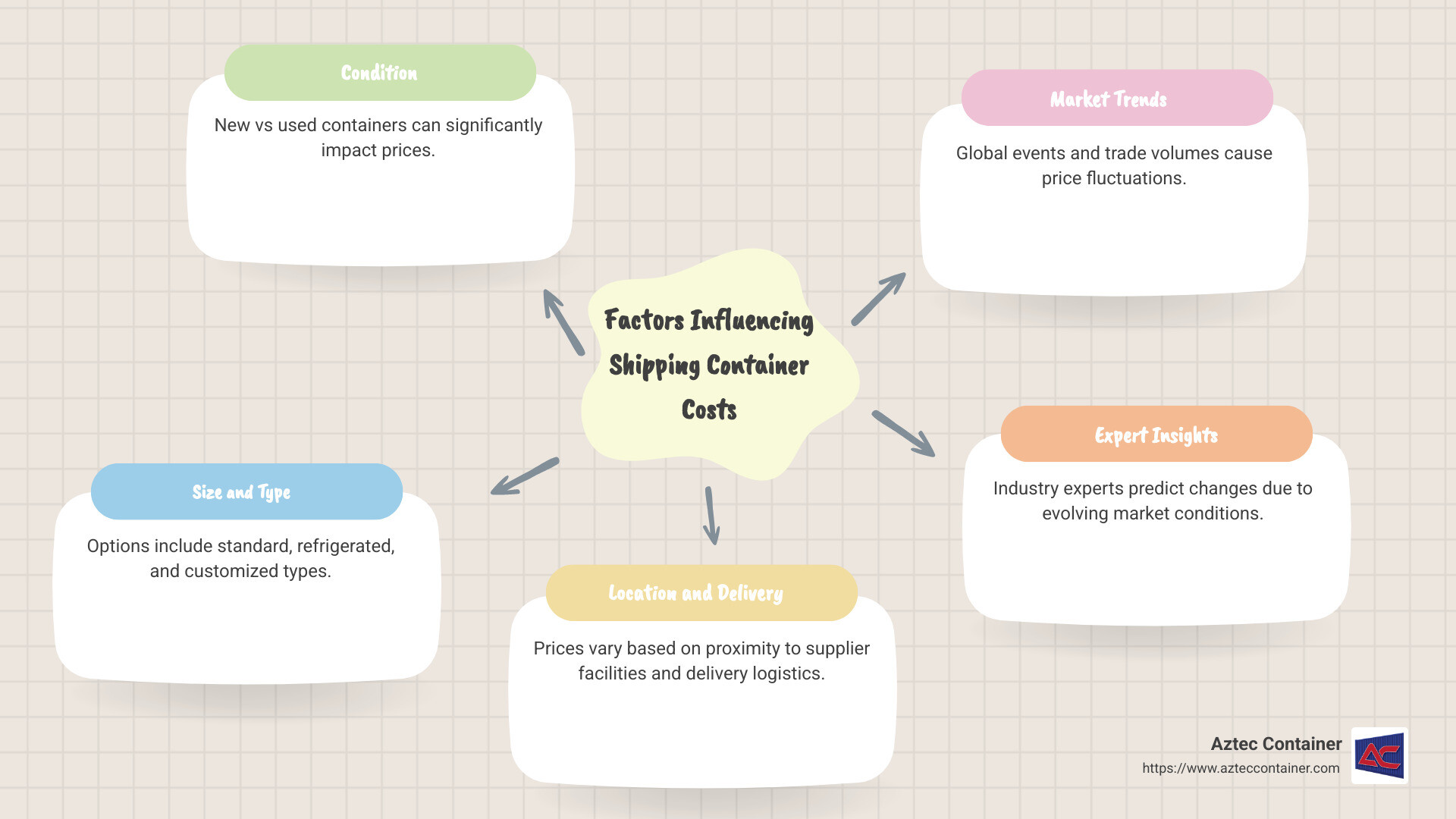
How much is a shipping container? This question is crucial for business owners and construction managers seeking flexible and efficient storage solutions. The cost of a shipping container is influenced by several factors:
- Condition: New vs used containers
- Size and Type: Standard, refrigerated, or customized options
- Location and Delivery: Proximity to supplier facilities and delivery challenges
Understanding these elements provides clarity on the fluctuating prices and market dynamics.
Global trends also impact container costs. Shipping container prices have seen dramatic changes, partly fueled by global events and fluctuating trade volumes. As market conditions evolve, prices shift, often creating challenges for those navigating this vast industry. An industry expert noted, “It is a bubble and it will eventually pop,” hinting at the complex nature of these dynamics.
I’m Steve Hyndman, Vice President of Aztec Container, and I’ve navigated these market waters for decades. With experience in exploring how much is a shipping container, I aim to simplify these insights for you. Let’s explore these cost factors and trends further.
How much is a shipping container word guide:
How Much is a Shipping Container?
When considering how much is a shipping container, it’s important to understand the price range and the factors influencing these costs.
Price Range
The cost of shipping containers varies significantly. Generally, prices are dependent on whether the container is new or used. New containers, often referred to as “one-trip” containers, are typically more expensive because they have only been used once, ensuring minimal wear and tear. Used containers, on the other hand, are more budget-friendly but may come with some wear due to their previous usage history.
New vs Used
New Containers: These are often called “one-trip” containers. They are manufactured overseas and used once to transport goods before being sold. They are in excellent condition, making them ideal for those who prioritize quality and longevity.
Used Containers: Typically 10 to 15 years old, these containers are more affordable. They may have been exposed to the elements and show signs of wear, such as rust or dents. However, used containers are still functional for storage and other applications if inspected thoroughly.

Condition
The condition of a shipping container greatly affects its price. There are different grades of used containers:
- IICL-Inspected: These are newer and meet high standards for international shipping. They are more expensive but offer better reliability.
- Cargo Worthy: Suitable for shipping and storage, these containers are structurally sound but may have cosmetic wear.
- Wind and Water Tight: Ideal for storage, these containers are no longer suitable for shipping but provide secure and dry storage solutions.
Understanding the condition and history of a container is crucial. A thorough inspection can reveal potential issues, ensuring you make an informed purchase.
In summary, the cost of a shipping container is not just about the initial price. It’s about choosing the right condition and type for your specific needs, whether it’s for shipping, storage, or even conversion into a home or office space.
Next, we’ll dig into the various factors that influence shipping container prices, such as size, type, and modifications.
Factors Influencing Shipping Container Prices
When determining how much is a shipping container, several key factors come into play. Let’s explore these elements to understand what affects container pricing.
Size and Type
The size of a shipping container is a primary factor in its cost. Standard sizes include 20-foot and 40-foot containers. Larger containers generally cost more due to the increased material and manufacturing costs.
- 20-foot containers: These are ideal for smaller storage needs or projects.
- 40-foot containers: Suitable for larger storage or conversion projects, offering more space.
The type of container also impacts the price. For example, high-cube containers, which provide extra height, can be more expensive than standard containers. Specialized containers like refrigerated or insulated units also come with a higher price tag due to their additional features.
Modifications
Custom modifications can significantly influence container prices. Adding windows, doors, or insulation increases the cost. For instance, if you’re converting a container into a living space or office, you may need electrical installations, plumbing, and climate control, which can add to the overall expense.
Basic modifications, such as adding a lockbox for security or vents for air circulation, are less costly but still affect the final price.
Location
Where you are located in the U.S. plays a crucial role in shipping container costs. Prices vary based on proximity to major depot facilities. For example, if you’re closer to a major city with a depot, you might find more competitive pricing.
In contrast, rural areas might see higher prices due to additional transportation costs from depots in urban centers. Aztec Container operates in several states, including Arizona, California, and Texas, which might influence pricing based on local market conditions.
Delivery
Delivery is another factor influencing the cost. The method and distance of delivery can add to the price. For short distances (under 200 miles), a tilt-body truck is typically used, while longer distances require a flatbed truck.
The cost also includes the equipment needed to unload the container at your location, especially if the container is loaded with goods. Delivery times can vary, with longer lead times during peak seasons.
Understanding these factors helps in making an informed decision about purchasing or renting a shipping container. Knowing what affects the price can help you budget appropriately and choose the right container for your needs.
Next, we’ll compare the costs and benefits of buying versus renting shipping containers.
Buying vs Renting Shipping Containers
When deciding between buying or renting a shipping container, it’s crucial to weigh the costs and benefits of each option. Here’s a breakdown to help you make the best choice for your needs.
Cost Comparison
Buying a Shipping Container:
Purchasing a container is a significant upfront investment. However, it can be more economical in the long run if you plan to use it for an extended period. Buying allows you to customize the container to your specifications, whether it’s adding windows, doors, or insulation.
Renting a Shipping Container:
Renting offers a lower initial cost, making it ideal for short-term needs. Monthly rental fees vary based on the container size and location. Renting provides flexibility, allowing you to return the container when it’s no longer needed. This can be particularly useful for temporary projects or seasonal storage.
Resale Value
Owning a shipping container comes with the potential for resale. If you no longer need the container, you can sell it and recoup some of your investment. The resale value depends on the container’s condition and any modifications made. Containers that are well-maintained and have useful features tend to fetch higher prices in the resale market.
Rental Benefits
Renting a container comes with several advantages:
- Flexibility: You can rent for as long as needed without a long-term commitment.
- Maintenance: Rental companies typically handle maintenance, ensuring the container remains in good condition.
- Convenience: Renting eliminates the need for storage space when the container is not in use.
Choosing between buying and renting depends on your specific needs and budget. If you require a container for a long time and plan to make modifications, buying might be the better option. However, if your needs are temporary, renting could be more cost-effective.
Next, we’ll dig into the costs associated with building shipping container homes.
Shipping Container Homes: A Cost Overview
Building a home from shipping containers is a unique and cost-effective way to create a living space. Let’s break down the costs involved in constructing these homes, explore prefab options, and discuss customization possibilities.
Construction Costs
The cost to build a shipping container home can vary widely. On average, a basic container home might range from $10,000 to $35,000. Larger, more elaborate designs can soar up to $175,000. Factors influencing these costs include the number of containers used, the complexity of the design, and the level of customization desired.
- Basic Construction: Using one or two containers for a simple layout keeps costs lower. Essential modifications like insulation, plumbing, and electrical work are necessary for comfort and functionality.
- Complex Designs: Larger homes using multiple containers, or those with advanced features like rooftop gardens or solar panels, will cost more due to increased labor and materials.
Prefab Container Homes
Prefab container homes offer a streamlined solution for those looking to minimize construction time and complexity. These homes are built using multiple 20-foot containers and can be customized with different finishes and features.
- Cost Range: Prefab homes typically cost between $32,000 and $50,000. This price reflects the basic structure and does not include delivery and installation fees, which can add another $700 per unit.
- Customization Options: Buyers can choose from various exterior finishes such as white, wood color, or black. Doors can be standard or glass, and there’s even an option for roll-up doors. These choices allow for a personalized touch while still benefiting from the efficiency of prefab construction.
Customization
One of the biggest advantages of building with shipping containers is the ability to customize. Whether you’re starting from scratch or modifying a prefab design, the possibilities are vast.
- Interior Design: You can add partitions, install modern kitchens, or create open-concept spaces. The interior can be finished with drywall or left with an industrial look.
- Exterior Modifications: Add windows, doors, or even an additional roof for extra insulation. Exterior cladding can transform the look from industrial to contemporary or rustic.
- Sustainability Features: Incorporate green technologies like rainwater harvesting systems or solar panels to reduce environmental impact and utility costs.
Shipping container homes offer a flexible and cost-effective way to create unique living spaces. With options ranging from basic builds to fully customized homes, there’s a solution for almost every budget and taste.
Next, we’ll answer some of the most frequently asked questions about shipping containers.
Frequently Asked Questions about Shipping Containers
How much does a 40-foot container cost?
A 40-foot container is a popular choice for many due to its ample space and versatility. While prices can fluctuate based on factors like location and market demand, understand that these containers are generally more cost-effective than you might think. For instance, new one-trip 40-foot containers are often available at competitive rates because they are widely available. That the condition and any additional features, such as high cube options, can impact the price. Always consider delivery costs to your specific location, as they can vary significantly.
What is the cost of a 20-foot container?
When considering how much is a shipping container, the 20-foot version is often a go-to for those with smaller storage needs or tighter budgets. These containers, while compact, can hold the contents of a three-bedroom home. The price of a new one-trip 20-foot container is typically lower than that of a 40-foot container. However, the price can still vary based on condition, modifications, and delivery factors. Used containers can provide a more budget-friendly option, although they may come with some wear and tear.
How much is a shipping container home?
Shipping container homes are a creative and cost-effective way to build a unique living space. The cost of these homes can vary widely. A basic container home might start around $10,000, with more elaborate designs reaching up to $175,000. Factors affecting these costs include the number of containers used, the complexity of the design, and the level of customization. Prefab options can streamline the process and offer a range of customization features, but it’s crucial to account for additional costs like delivery and installation.
Shipping container homes provide a flexible and innovative housing solution, allowing for a wide range of design possibilities. Whether you’re looking for a simple, budget-friendly option or a more complex, custom design, there’s likely a container home that fits your needs and budget.
Conclusion
At Aztec Container, we understand that choosing the right shipping container is crucial for meeting your needs, whether you’re using it for storage, an office, or even a home. Our goal is to provide competitive pricing and tailor our solutions to fit your specific requirements.
We pride ourselves on offering a wide range of containers, from new one-trip options to used containers in various conditions. This flexibility allows us to cater to different budgets and project needs. Our competitive pricing strategy ensures that you get the best value without hidden costs, making us a trusted partner in the shipping container industry.
Customer satisfaction is at the heart of what we do. Our team is here to guide you through the buying or renting process, ensuring you make an informed decision. With locations across several states, including Arizona, California, and Texas, we offer fast delivery and personalized service no matter where you are.
Whether you’re looking for a standard 40-foot container or a customized solution, Aztec Container is ready to help you find the perfect fit. Our commitment to quality and customer service makes us a reliable choice for all your shipping container needs.