


Introduction
Shipping containers are the unsung heroes of global commerce. Whether it’s carrying electronics from the U.S. to China or moving organic produce across town, containers make it possible. Among the most popular are the 20-foot containers—compact, affordable, and versatile. But even within this size category, not all containers are created equal. Two major types stand out: refrigerated containers and insulated containers.
Each serves a different purpose and performs uniquely under various conditions. Choosing between the two isn’t just a matter of cost—it’s about matching your logistics needs to the container’s capabilities. Do you need constant low temperatures? Or just protection from external heat? Understanding these differences is crucial.
In this blog, we’ll break down the main features, use cases, and pros and cons of refrigerated vs. insulated 20-foot containers, helping you make the right decision based on your specific needs.
Evolution of Shipping Containers
Shipping containers didn’t always exist. Before the 1950s, goods were packed in wooden crates, sacks, or barrels, time-consuming and inefficient. Malcolm McLean revolutionized transport with the invention of standardized containers. Suddenly, moving goods became faster, safer, and cheaper.
Over the decades, containers have evolved. We now have dry containers, high cubes, open tops, flat racks, and, of course, refrigerated and insulated containers. These two are particularly vital for perishable goods and temperature-sensitive items.
Their growing popularity is driven by increased global trade, rising demand for fresh food, and stricter regulations in industries like pharmaceuticals. If your business falls into any of these categories, understanding how these containers evolved can offer insights into choosing the right one.
Importance in Modern Logistics
Without these specialized containers, supply chains would fall apart, especially for goods that must be stored at specific temperatures. Think of vaccines, seafood, dairy products, or chocolate. All of them are extremely sensitive to temperature fluctuations.
Refrigerated and insulated 20-foot containers are small enough for localized delivery yet robust enough for international shipping. Their portability, stackability, and easy integration with trucks and ships make them a go-to option.
Plus, with eCommerce booming and consumers expecting faster deliveries of even temperature-sensitive items, the demand for these containers is only growing. If you’re in logistics, retail, or manufacturing, choosing the right container could streamline your operations and protect your goods better.

What Is a 20 Foot Refrigerated Container?
Also known as a reefer, a 20-foot refrigerated container is equipped with a built-in cooling unit. These containers are designed to actively regulate the internal temperature, making them ideal for goods that require constant cooling or freezing during transit or storage.
Key Features:
- Temperature control: Typically ranges from -20°C to +25°C (-4°F to +77°F)
- Active cooling system powered by electric or diesel energy
- Stainless steel interior for easy sanitation
- Air circulation system for even cooling
Best Used For:
- Perishable food items (meat, dairy, seafood, produce)
- Pharmaceuticals and medical supplies
- Flowers and plants
- Temperature-sensitive electronics
These features make refrigerated containers suitable not only for shipping but also for on-site storage during events or at remote construction sites.
But here’s the catch—they consume more power and usually cost more than insulated containers. That’s something to keep in mind depending on your budget and frequency of use.
Common Use Cases for 20 Foot Refrigerated Containers
If you’re wondering when and why you’d need a reefer, consider these scenarios:
- Food Industry: Meat, seafood, dairy, frozen vegetables—anything perishable benefits from refrigeration.
- Pharmaceuticals: Vaccines, insulin, and other temperature-sensitive meds require exact storage conditions.
- Florists and Nurseries: Plants and flowers can wilt or die if exposed to high temperatures during transit.
- Art and Antiques: Museums often use refrigerated containers to transport delicate pieces that can degrade in heat.
- Event Catering: Keeping food cold at outdoor events, concerts, or festivals.
The list goes on. If your product has even the slightest temperature sensitivity, refrigerated containers are likely your best bet.
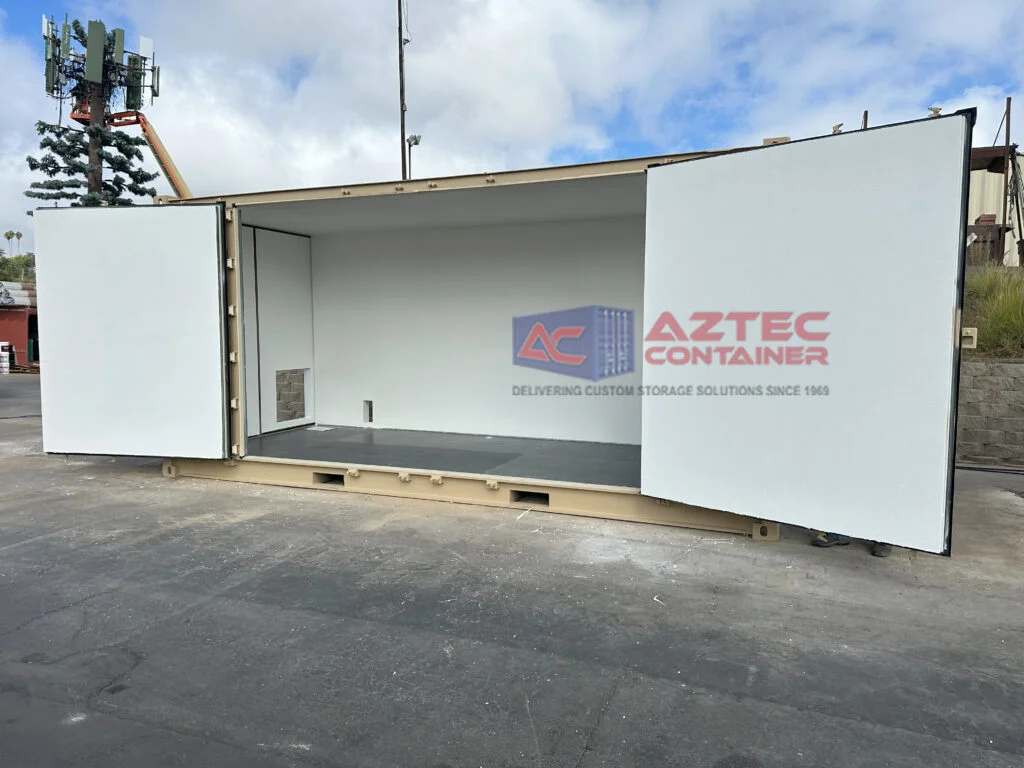
What Is a 20 Foot Insulated Containers
Now let’s shift gears and talk about insulated containers. At first glance, they may look like refrigerated units. But don’t be fooled—they function quite differently.
Insulated containers, sometimes called “reefers containers,” are designed to retain internal temperature rather than generate it. They don’t have built-in cooling or heating systems. Instead, they rely on heavy insulation to slow down the rate of temperature change.
They’re excellent for short-distance transport or for items that just need to stay cool, but not freezing, for a few hours or days.
Key Features:
- Passive insulation to slow down temperature changes
- Made from polyurethane, polystyrene, or similar materials
- Durable walls that resist heat exchange
- No internal power or mechanical cooling components
Best Used For:
- Goods that need protection from extreme temperature fluctuations
- Storage of dry goods in hot or cold climates
- Short-term transport of semi-sensitive materials
- Converting into modular living or working units
Common Use Cases for Insulated 20 Foot Containers
If you’re exploring when an insulated container makes sense, check out these real-world applications:
- Construction Sites: Store tools, equipment, or materials that need protection from extreme heat or cold.
- Modular Buildings: Ideal for conversion into mobile offices, guard shacks, or temporary housing units.
- Short-Term Storage: Great for items like furniture, electronics, or documents that need stable temperature conditions.
- Dry Food Storage: Perfect for non-perishable food items like grains, packaged snacks, or beverages.
- Remote Locations: Used in areas with limited access to power, where temperature stability, not refrigeration, is needed.
- Disaster Relief or Emergency Prep: Quick deployment for storage of supplies without relying on powered systems.
These containers are widely used when full refrigeration is overkill. If your goods just need to stay “not too hot” rather than “super cold,” this might be your perfect match.
Refrigerated vs. Insulated Containers: The Key Differences
| Feature | Refrigerated Container | Insulated Container |
|---|---|---|
| Temperature Control | Active cooling/heating system (precise temperature control) | Passive insulation (retains existing temperature) |
| Power Requirement | Requires electricity or diesel to operate | No external power needed |
| Temperature Range | -30°C to +30°C (customizable) | Ambient temperature buffering only |
| Usage Duration | Suitable for long-term transport/storage | Ideal for short-term use (hours to a few days) |
| Energy Consumption | High (continuous power needed) | None |
| Cost (Initial & Operational) | Higher purchase/rental and running costs | Lower cost, minimal maintenance |
| Mobility | Heavier and requires a power source | Lightweight and more portable |
| Maintenance Needs | High (compressors, thermostats, electrical components) | Low (basic inspection of insulation) |
| Common Use Cases | Frozen food, pharmaceuticals, flowers, sensitive electronics | Local deliveries, baked goods, beverages, and cosmetics |
| Monitoring Capabilities | Real-time temperature and GPS tracking available | Manual data logging only |
| Regulatory Compliance | Meets strict standards (GDP, HACCP, ISO) | Limited compliance options |
| Environmental Impact | Higher (due to energy use and emissions) | Lower (no power use or emissions) |
| Customization Options | High (sensors, partitions, remote monitoring) | Moderate (shelving, insulation upgrades) |
| Best for | Long-distance shipping and sensitive goods | Short hauls and non-critical temperature items |
Which One Is Right for You?
Choose a Refrigerated Container if:
- Your goods need a consistent cold or frozen environment
- You require reliable transport over long distances
- You’re in the food, pharmaceutical, or floral industry
Choose an Insulated Container if:
- You’re storing goods temporarily
- You want to convert it into an office, home, or storage unit
- Your products only need protection from temperature swings, not constant cooling
Conclusion
Both refrigerated and insulated 20-foot containers serve valuable purposes but cater to different needs. If you need precise temperature control for perishable or sensitive products, a refrigerated container is your best bet. On the other hand, if you’re looking for cost-effective, passive temperature protection or a container for modular living, go for an insulated container.
Understanding your storage or transport requirements is the first step toward making the right investment. For expert advice or to explore your options, feel free to contact Aztec Container and let our team help you choose the best-fit solution for your business or project.