


Introduction
Shipping containers are the backbone of global trade and logistics. If you’ve ever bought something online that came from another country, chances are it spent part of its journey in a big steel box. But not all containers are created equal. Sizes vary, and picking the wrong one can cost you time, money, and a logistical headache you didn’t ask for.
So, who’s this guide for? If you’re in logistics, e-commerce, construction, or just someone curious about converting a shipping container into an office, this guide has you covered. We’re diving deep into the different sizes, uses, and everything you need to know to choose the right container for your project.
What is a Shipping Container?
A shipping container is essentially a big, durable, reusable steel box used to transport goods across long distances. Think of it as a modern-day treasure chest—except instead of gold, it’s usually packed with furniture, electronics, machinery, food, or raw materials. These containers are built to withstand harsh sea conditions, rough handling at ports, and long-distance trucking.
The idea of containerization revolutionized global shipping back in the mid-20th century. Before containers, goods were loaded piece by piece—slow, expensive, and inefficient. Then came Malcolm McLean, the man who essentially invented the modern container in the 1950s. His idea was simple: standardize the size and structure of cargo containers so they could be easily stacked, locked, and transferred between ships, trains, and trucks.
Since then, containers have become the unsung heroes of globalization. The International Organization for Standardization (ISO) stepped in to standardize dimensions and specifications, enabling smooth operations worldwide. These standardized boxes now make up the majority of global cargo shipments—and they’re also popping up in modular offices and mobile shops. Talk about versatility!
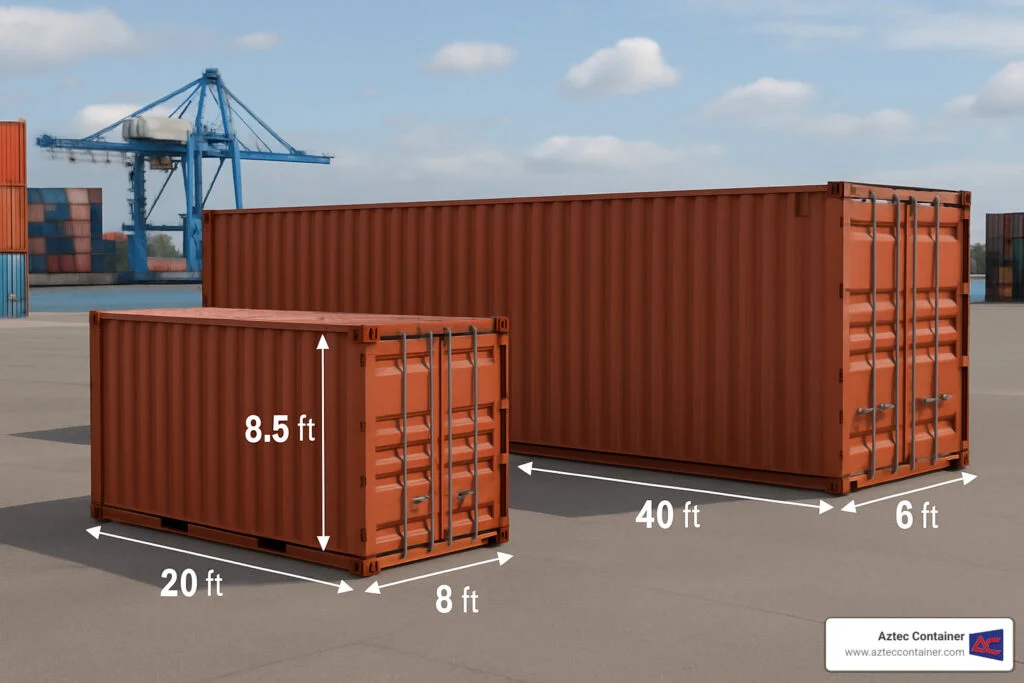
Standard Shipping Container Dimensions
When we talk about container sizes, we’re usually referring to ISO-standard containers. These are the containers you see stacked high on cargo ships, hauled by 18-wheelers, or converted into hipster coffee shops in big cities. ISO containers are standardized to ensure compatibility across all transport modes.
Here’s a quick overview of standard ISO container dimensions:
- 10-foot containers – Small but handy for tight spaces
- 20-foot (TEU) – The original workhorse of the shipping industry
- 40-foot (FEU) – Twice the length, widely used for bigger shipments
All containers are measured in feet, with dimensions including:
- External length, width, and height
- Internal length, width, and height
- Door width and height
- Tare weight (empty), max payload, and gross weight
The key is understanding how these dimensions impact your ability to load, stack, and transport cargo efficiently.
10-Foot Shipping Container
Now, let’s shrink things down a bit. The 10-foot container may be the baby of the family, but don’t underestimate its usefulness. It’s compact, durable, and surprisingly versatile—especially when space is tight, or you’re storing smaller quantities of items.
Dimensions:
- External: 10’ L x 8’ W x 8’6” H
- Internal: 9’4” L x 7’8” W x 7’10” H
- Door opening: 7’8” W x 7’6” H
- Max payload: ~10,000 kg (22,000 lbs)
- Volume: ~16 cubic meters (580 cubic feet)
Common Uses:
- Construction site storage
- On-site office containers
- Residential storage
- Small business inventory
- Modified kiosks or ticket booths
These containers are often used in urban settings where space is limited. If you’re a small business in need of secure storage or a homeowner looking to declutter the garage, the 10-footer fits like a glove. Plus, they’re easy to transport, requiring just a small flatbed truck or trailer.
20-Foot Shipping Container
The 20-foot container is the OG of the shipping world. Also known as a TEU (Twenty-foot Equivalent Unit), it’s the standard measurement used to describe container ship capacity. Compact, strong, and easy to move, this container is perfect for smaller loads or heavier cargo like machinery, metals, and building materials.
Dimensions:
- External: 20’ L x 8’ W x 8’6” H
- Internal: 19’4” L x 7’8” W x 7’10” H
- Door opening: 7’8” W x 7’6” H
- Max payload: ~28,000 kg (61,700 lbs)
- Volume: ~33 cubic meters (1,165 cubic feet)
Common Uses:
- International freight
- Portable storage units
- Equipment transport
- Pop-up retail booths
This size is great for people who need something mobile but still fairly spacious. It’s stackable, easy to load on a truck, and fits in tight yards or spaces. In short, it’s a favorite for both shipping and creative repurposing.
40-Foot Shipping Container
Need more space? Double up with a 40-foot container, also known as an FEU (Forty-foot Equivalent Unit). This container offers twice the floor space of a 20-foot container, but only adds a bit more weight when empty. It’s ideal for large, bulky, or high-volume items like furniture, textiles, or manufactured goods.
Dimensions:
- External: 40’ L x 8’ W x 8’6” H
- Internal: 39’5” L x 7’8” W x 7’10” H
- Door opening: 7’8” W x 7’6” H
- Max payload: ~26,500 kg (58,400 lbs)
- Volume: ~67.5 cubic meters (2,385 cubic feet)
Common Uses:
- Best for full-scale shipping operations
- Good balance between space and weight
- Easier to stack on ships and move via rail or truck
If you’re shipping internationally or doing a major renovation using shipping containers, the 40-foot is your go-to. It’s one of the most common containers in the world and is available in almost every port or container yard.
Comparison Table: Popular Container Sizes
Here’s a side-by-side comparison of the most commonly used container types:
| Container Type | External Dimensions (L x W x H) | Internal Volume | Max Payload | Notes |
|---|---|---|---|---|
| 10 foot Dry | 10′ x 8′ x 8’6″ | ~580 cu ft | ~10,000 kg | Compact, ideal for storage |
| 20 foot Dry | 20′ x 8′ x 8’6″ | ~1,165 cu ft | ~28,000 kg | Most common TEU |
| 40 foot Dry | 40′ x 8′ x 8’6″ | ~2,385 cu ft | ~26,500 kg | Great for bulk freight |
| 40 foot High Cube | 40′ x 8′ x 9’6″ | ~2,694 cu ft | ~26,000 kg | Extra height for volume |
| Reefer | 20’ / 40’ sizes | Varies | ~20,000–29,000 kg | Refrigerated transport |
This table is your cheat sheet when picking the perfect container. It helps visualize the trade-offs between size, capacity, and cost.
Interior Space and Volume Explained
Let’s unpack something easy to overlook—usable space vs. total volume. Sure, a container may boast over 2,000 cubic feet of space, but how much of that can you really use?
Internal space is affected by:
- Wall ridges and corner posts
- Floor thickness
- Door mechanisms
- Ceiling height limitations
For example, you can’t stack items to the absolute ceiling unless they’re perfectly shaped and packed. Also, items must fit through the door, which is usually smaller than the container’s internal dimensions.
Tips to maximize container volume:
- Use uniform-sized boxes for easy stacking
- Add shelving systems for vertical space
- Consider container width when planning pallet orientation
So don’t just think about total cubic feet—think about how you’ll use it. Efficient packing saves money and prevents damage in transit.
Maximum Payload and Weight Limits
One of the most misunderstood aspects of container use is weight capacity. Each container has:
- Tare Weight – the empty container’s weight
- Payload – the maximum cargo weight
- Gross Weight – total weight when fully loaded
For example:
- 20 foot container: Tare = ~2,300 kg, Payload = ~28,000 kg, Gross = ~30,480 kg
- 40 foot container: Tare = ~3,800 kg, Payload = ~26,500 kg, Gross = ~30,480 kg
Important Considerations:
- Don’t overload—you’ll get fined or delayed at port/customs
- Even distribution—avoid putting all heavy items on one end
- Regulations vary by country—some roads have strict axle weight limits
Always consult with your freight provider and weigh your cargo accurately before loading. Better safe than stuck at the port.

Choosing the Right Container for Your Needs
Let’s be honest—there’s no such thing as a “one-size-fits-all” shipping container. The right one depends entirely on your needs, cargo, destination, and even plans. So, before you rush into buying or renting a container, consider these factors:
1. Type of Cargo
- Heavy items (e.g., machinery): Opt for a 20 foot container. Shorter containers can handle more weight because their structure is sturdier and better balanced for dense cargo.
- Light but bulky goods (e.g., furniture, textiles): Go with a 40 foot or 40ft high cube. You’ll maximize volume without worrying about weight restrictions.
- Perishable items: You need a reefer container—no exceptions.
2. Budget Constraints
If money’s tight, consider:
- Used containers for one-time or static storage needs
- Leasing options for short-term projects
- Avoiding high cube or specialty containers unless necessary
3. Intended Use
- Shipping goods? Focus on size, weight limits, and cargo compatibility.
- Building a Cafe/office? Go with high cube containers for comfort and insulation.
- Mobile retail or event setups? Smaller containers (10ft or 20ft) are easier to transport and customize.
Choosing the right container isn’t just about fitting your stuff—it’s about optimizing logistics, saving costs, and meeting your end goal without unnecessary hassle.
Container Modifications and Custom Uses
Containers aren’t just for shipping anymore. These rugged steel boxes have found a second life in some surprisingly creative ways. From chic pop-up cafes to cozy off-grid homes, containers have become the foundation for innovation.
Popular Container Conversions:
- Offices and Studios – Containers make perfect on-site offices for construction or remote workstations in the middle of nowhere.
- Pop-up Shops – Brands love the industrial look and portability. They can be plopped down at events or urban markets.
- Workshops and Garages – With a few tweaks, containers can become secure tool sheds or garages.
- Emergency Shelters or Clinics – In disaster zones or remote areas, modified containers serve as field hospitals or housing.
Common Modifications Include:
- Cutting doors, windows, or skylights
- Installing insulation and HVAC systems
- Adding plumbing and electrical wiring
- Painting and rustproofing
- Connecting multiple containers to create larger structures
Environmental Considerations
Shipping containers may not seem eco-friendly at first glance—they’re big hunks of steel, after all—but surprisingly, they can be a sustainable option when used wisely.
1. Recycling and Upcycling
When containers reach the end of their shipping life (usually around 10–15 years), they can still serve as:
- Storage units
- Building materials
- Furniture (yes, people have turned container walls into desks and shelving)
- Emergency shelters
By upcycling containers, we reduce the need for new materials like wood or concrete. One reused container = tons of saved construction resources.
2. Reduced Construction Waste
Compared to traditional building, container-based structures produce less waste, consume fewer raw materials, and often have a smaller carbon footprint—especially if modified off-site.
3. Energy Efficiency
With proper insulation and design:
- Containers can become energy-efficient homes or offices.
- Solar panels and green roofs can be added.
- Rainwater harvesting systems are easy to install on container structures.
4. Mobility = Less Environmental Impact
Moving a pre-fab container home is much more efficient than demolishing and rebuilding a structure elsewhere. It saves energy, resources, and time.
Containers are also ideal for temporary structures in remote areas, such as field hospitals, construction offices, or disaster-relief shelters, where building from scratch would strain both the budget and the environment.
In short, shipping containers—when reused thoughtfully—can be a powerful ally in sustainable development.
Conclusion
Shipping containers may look simple—just big metal boxes, right? But dive a little deeper, and you’ll see they’re incredibly versatile, valuable, and essential to global logistics and modern construction. Whether you’re shipping goods across oceans, building a backyard office, or launching a pop-up shop, choosing the right size and type of container can make or break your project.
Understanding container dimensions, payload capacities, specialty types, and market pricing puts you in the driver’s seat—no more guesswork or expensive mistakes. Need lots of space? Go for a 40ft high cube. Short-term storage? A 10 foot will do. Hauling sensitive cargo? You’ll want a reefer. It’s all about matching your needs to the right tool.
And as the world continues to prioritize sustainability and space-saving solutions, containers are becoming more than just a shipping solution—they’re a smart investment for innovators, business owners, and everyday problem-solvers.