


Shipping container delivery: 4 Steps for Budget Success
Why Shipping Container Delivery Planning Saves You Money
Shipping container delivery involves transporting containers from a depot to your site using specialized trucks. Here are the key delivery methods available:
Common Delivery Methods:
- Tilt-Bed (Roll-Off): Most cost-effective, no equipment needed, requires 75-120 feet clearance
- Flatbed: Best for long distances, requires forklift/crane for unloading
- Crane/Side-Loader: Higher cost, ideal for tight spaces or placing over obstacles
Typical Costs: Local deliveries range from $100-$500, with long-distance shipping costing $2-$7 per mile.
Proper planning is the key to an affordable shipping container delivery. Many businesses overspend because they are unaware of the different delivery truck options or how site preparation impacts the final cost.
Poor planning leads to expensive problems, like trucks getting stuck on unprepared sites (leaving you responsible for rescue costs) or choosing the wrong delivery method, which can add hundreds to your bill. The good news is that smart planning can cut delivery costs by 30-50%.
I’m Steve Hyndman, Vice President of Aztec Container. With over 30 years of experience coordinating thousands of shipping container delivery operations, I’ve learned that success comes down to four simple steps: choosing the right method, preparing your site, coordinating logistics, and being ready on delivery day.

Simple guide to shipping container delivery terms:
Understanding Common Delivery Methods
Choosing the right shipping container delivery method is crucial. These containers weigh several tons and require specialized trucks. Modern delivery methods can place your container at ground level, ready for immediate use. The best method depends on your site, travel distance, and available equipment.
Here’s how the three main delivery methods stack up:
| Method | Best For | Cost (relative) | Equipment Needed (customer) |
|---|---|---|---|
| Tilt-Bed (Roll-Off) | Most common, ground-level delivery, shorter distances | Lower | None |
| Flatbed | Long distances, multiple containers | Medium | Forklift or Crane |
| Crane or Side-Loader | Tight spaces, obstructions, precise placement | Higher | None |

Tilt-Bed (Roll-Off) Truck Delivery
Picture a dump truck, but instead of dumping gravel, it gently slides your container to the ground. That’s essentially what a tilt-bed truck does, and it’s our go-to method for most deliveries.
These trucks work like a gentle giant. The driver backs up to your chosen spot, activates the hydraulics to tilt the bed, and your container slides off with the help of a winch system.
Why most customers love tilt-bed delivery: You don’t need any special equipment on your end. No scrambling to rent a forklift or hire a crane operator. The truck does all the work, and you get your container sitting exactly where you want it, ready to open up and use.
The trade-off is space. These trucks need room to maneuver. We’re talking about 75 feet for a 20-foot container and up to 120 feet for a 40-foot container. If your site feels cramped or has tight corners, this method might not work.
There’s also a weight consideration. While tilt-beds handle empty containers beautifully, they typically can’t manage loaded 40-foot containers safely.
Flatbed Truck Delivery
When you need to move containers across states or transport multiple units at once, flatbed trucks become the heroes of long-distance shipping container delivery.
The catch? Flatbeds are fantastic at transportation but cannot unload themselves. Once your container arrives, it’s just sitting there on the trailer, waiting for you to get it down.
This is where your planning skills matter most. You’ll need either a forklift capable of lifting several tons or a crane service waiting at your site.
Flatbed delivery shines for long hauls because these trucks eat up highway miles efficiently. If you’re moving a container over a long distance, such as from one state to another, a flatbed will likely save you money compared to other methods, even after factoring in the equipment rental costs.
The method also works well if you’re ordering multiple containers or already have heavy equipment on-site. Construction companies and industrial facilities often prefer flatbed delivery because they have the infrastructure to handle the unloading.
Crane or Side-Loader Truck Delivery
Sometimes your delivery site throws us a curveball, like a fence in the way or a space too tight for a tilt-bed’s long approach. That’s when we call in the specialists: crane trucks and side-loaders.
Side-loader trucks use hydraulic arms mounted along the truck’s side to lift your container horizontally and place it beside the truck. Some can even stack containers two high.
Crane-equipped trucks take flexibility even further. Need your container placed over a fence or on an liftd platform? We can do that. These trucks can lift containers up and over obstacles that would stop other delivery methods cold.
The downside is cost and availability. These specialized trucks require skilled operators and sophisticated equipment, which means higher hourly rates. They’re also not as common, so you might need to schedule further in advance.
But when you absolutely need that container in a challenging spot, crane and side-loader delivery earn their keep.
Choosing the right delivery method sets the stage for everything that follows. Get this decision right, and the rest of your shipping container delivery experience becomes much smoother.
How to Prepare Your Site for a Smooth Delivery
Imagine our truck arriving at your property only to find the ground is too muddy or there isn’t enough clearance. The driver would have to leave, and you would still be charged for the failed delivery attempt. This scenario is common but completely avoidable with proper site preparation for your shipping container delivery.
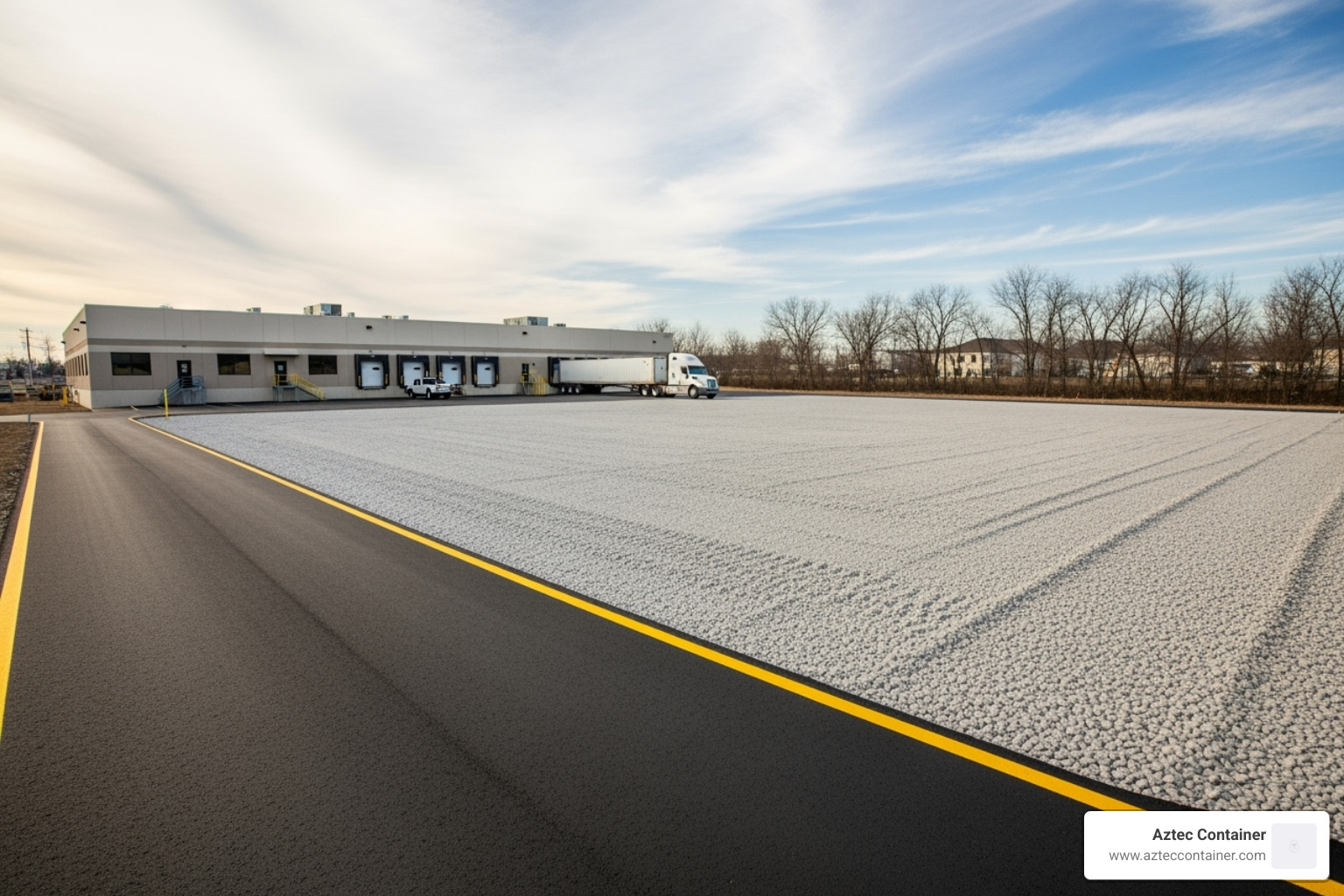
Our drivers operate trucks weighing over 45,000 pounds and need your help to ensure a smooth delivery. Fortunately, most site preparation is straightforward and saves you money and frustration.
Calculating Required Space and Clearance
Shipping container delivery trucks are big, and they need room to work safely.
Length is the big one. For tilt-bed deliveries (the most common method), our trucks need a long, straight path to slide your container off. There’s no backing up or making adjustments once the process starts.
For a 20-foot container, you’ll need 75 feet of straight-line clearance. For a 40-foot container, plan for 120 feet. The truck cannot turn during unloading. The entire path must be straight and unobstructed.
Width matters too. The delivery truck itself needs 12 to 14 feet of width along the entire route. This includes the truck plus a safety buffer for maneuvering. Measure between fences, buildings, parked cars, or any other obstacles.
Don’t forget to look up! Overhead clearance is often overlooked but critically important. Our delivery trucks are about 13.5 to 14 feet tall just driving down the road. During a tilt-bed delivery, they can reach 16 feet as the container slides off. For crane deliveries, the container might go as high as 22 feet.
Check for power lines, tree branches, building overhangs, and carports along the entire delivery path. Walk the entire delivery route, looking up for obstacles. Call us if you have any concerns before delivery day.
Ensuring a Stable and Level Foundation
The ground where your container will live needs to support a lot of weight and keep your container functional for years to come. Poor ground preparation is the number one cause of delivery failures.
Firm ground is non-negotiable. When a 45,000-pound truck shows up, soft surfaces like mud, wet grass, or loose dirt can trap the truck, leading to expensive rescue operations that you’ll be responsible for.
Pavement is perfect – concrete or asphalt can handle the weight easily. A well-compacted gravel pad works great too and is often the most practical solution. Hard-packed dirt can work if it’s been dry and hasn’t been disturbed recently.
Avoid muddy areas, sandy soil, steep slopes, or anywhere water tends to collect. If your site has been wet recently, wait for it to dry out completely before scheduling delivery.
Level ground keeps your doors working. Even a slightly uneven foundation can twist your container enough to jam the doors. Shipping containers are precisely built rectangles, and they need to stay that way.
The container’s weight should rest evenly on its four steel corner castings. Wood blocks or railroad ties are your best friends here. Place 4×4 or 6×6 pressure-treated lumber under these corner points, and ideally along the full length of the container.
For smaller containers (10 or 20 feet), 2-3 eight-foot long 4×4 boards usually do the job. Larger containers (40 feet and up) typically need 4-6 boards for proper support.
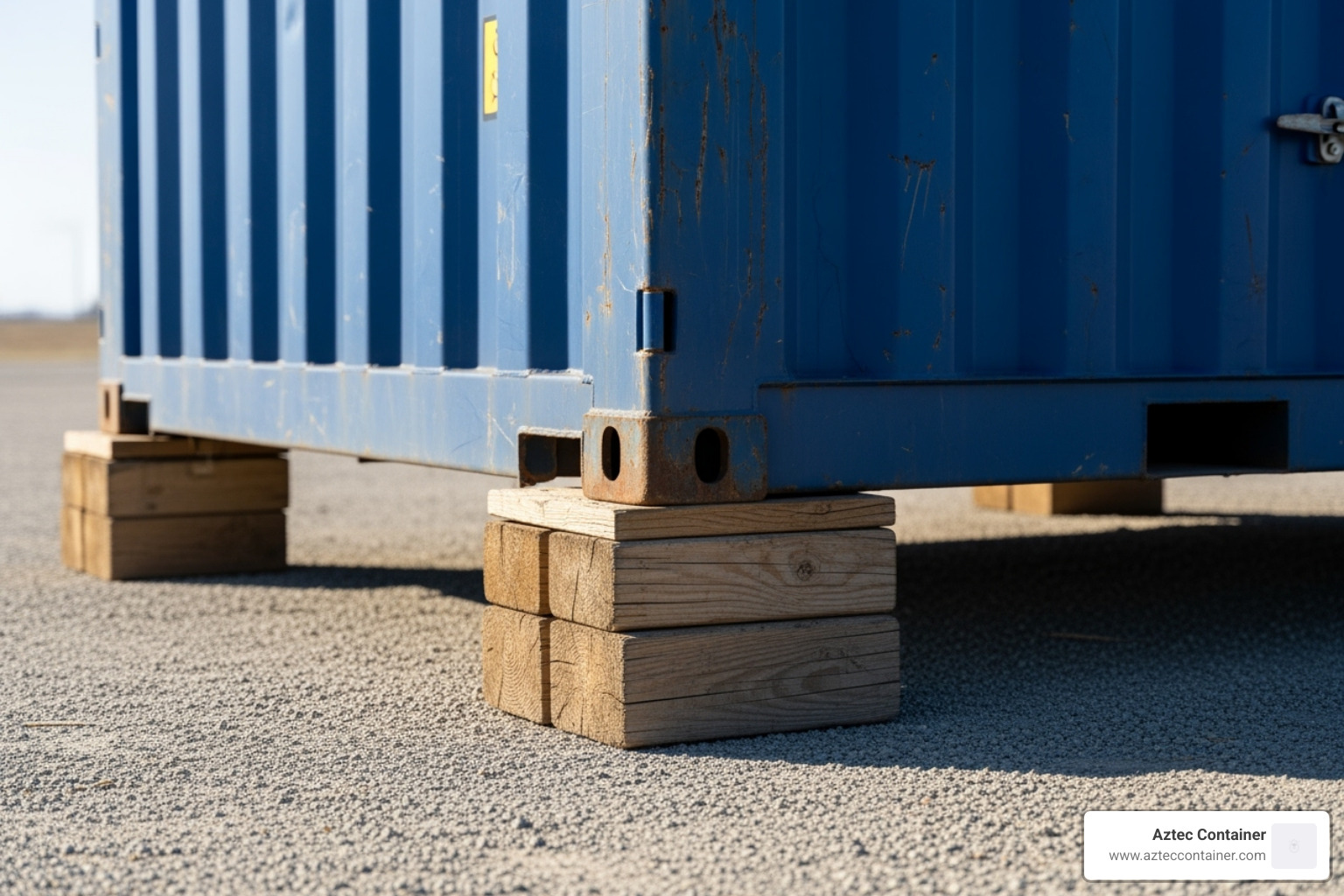
These blocks do more than just level your container. They prevent twisting, keep the container out of standing water (which can rot the wooden floor), and allow air circulation underneath. If you’re a visual learner, check out this helpful video on how to level a shipping container.
Taking time to properly measure and prepare your site is one of the smartest investments you can make in your shipping container delivery. It prevents costly delays, protects your container, and ensures everything works perfectly from day one. When in doubt, give us a call – we’re happy to walk through your site preparation with you.
Breaking Down the Costs of Your Shipping Container Delivery
Understanding shipping container delivery costs is key to staying on budget. While exact numbers vary with fuel prices and distance, we can explain what drives these costs and how you can save money.

Delivery fees are separate from your container cost. The fee covers the specialized truck, driver, fuel, and time to transport the container from our depot to your site. Understanding these costs upfront helps you make better decisions and avoid surprises.
Key Factors That Influence Delivery Price
Distance from depot is usually your biggest cost driver. More miles mean more fuel, more driver time, and higher costs.
Container size matters, but not how you might think. A 40-foot container isn’t automatically twice the price of a 20-footer, but it does require different equipment and more space to maneuver, which can increase your delivery cost.
The truck type you choose makes a real difference. A basic tilt-bed delivery is your most budget-friendly option. If your site needs a crane truck or side-loader, expect to pay more as these specialized trucks often charge by the hour.
Site accessibility can be a budget killer or saver. Easily accessible sites with paved roads and firm ground cost less to service. Challenging sites with narrow driveways or soft ground require more time and skill, which translates to higher costs.
Time on site can lead to extra charges. Our drivers typically complete a delivery in 30 minutes or less. If site issues cause delays beyond that window, you’ll see additional charges, usually billed in 15-minute chunks.
Failed delivery fees are charged if our driver arrives and finds your site unsafe or unsuitable for delivery. Since the trip was made, you’re still responsible for the trucking fees.
Tips for a Budget-Friendly Shipping Container Delivery
Want to save money on your shipping container delivery? Here are some tried-and-true strategies.
Be flexible with your delivery dates if possible. We can sometimes fit your delivery into existing routes, which may lower the price.
Prepare your site thoroughly. A well-prepared site prevents delays, failed deliveries, and extra time charges. This single step saves more customers money than anything else.
Choose the right truck for your situation. Don’t pay for a crane truck if a simple tilt-bed will work. Our team will help you find the most cost-effective option.
Get everything in writing before you commit. A detailed quote that spells out all delivery charges prevents surprises.
Be ready on delivery day. Have your site prepared and be available to meet the driver to ensure quick unloading. Every minute after the initial 30-minute window can cost you money.
Consider grouping orders if you need multiple containers. Discussing this with our sales team can sometimes create budget efficiencies.
The bottom line? Shipping container delivery costs don’t have to be mysterious. With proper planning, you can get your container delivered efficiently and affordably.
Key Logistics to Coordinate Before Delivery Day
After choosing a delivery method and preparing your site, the final step is coordinating logistics. Getting these details right will save you time, money, and potential headaches.

Clear communication and realistic expectations are key to a smooth shipping container delivery and prevent most common issues.
Specifying Door Orientation and Placement
A crucial detail is door orientation. When you place your order, we’ll ask which way you want the doors to face. It’s important to get this right the first time.
You have two main options: “Doors to the Cab” or “Doors to the Rear.” If you choose doors to the cab, your container gets loaded so the doors face away from the truck’s front when it’s unloaded. This works great if you want the doors opening toward your building or main access point.
Choose “Doors to the Rear” if you need the doors facing the direction the truck came from. This might be perfect if your driveway setup requires the doors to open toward the street or your main work area.
Why does this matter so much? Once that container hits the ground, moving it is difficult and expensive. Repositioning requires a crane or heavy forklift, and those fees can add hundreds to your bill.
Take a moment to walk your site and visualize where you’ll be accessing the container most often. Will you be loading from a dock? Do you need the doors facing your workshop? Planning this out beforehand is one of the smartest investments you can make in your shipping container delivery experience.
Typical Timelines and What to Expect
Once your order is processed, expect your container to arrive within 3 to 7 business days. This timeline accounts for coordinating heavy equipment and trucks over potentially long distances.
Here’s how the communication typically flows: Within 2 to 5 business days after your order is processed, the trucking company will reach out to you with an estimated delivery day.
Your driver will usually call you 24 hours before arrival to confirm a 2-hour delivery window. Then, about 30 minutes before they pull up to your site, you’ll get another call. This gives you time to clear any last-minute obstacles and be ready to guide them.
Once our driver arrives, we aim to complete most deliveries within 30 minutes. Having everything prepared and someone on-site who can make quick decisions keeps this timeline smooth.
Weather can cause delays. Heavy rain, snow, ice, or high winds can create safety hazards. If weather is an issue, we will proactively reschedule. A short delay is better than a stuck truck or damaged container, as safety is our top priority.
For those interested in the technical side of how these massive containers move around the country, you might find this resource on Transporting Shipping Containers fascinating.
The bottom line? Clear communication and realistic expectations make for happy customers and successful deliveries. We’re here to guide you through every step of the process, so don’t hesitate to ask questions.
Frequently Asked Questions about Delivery
Here are answers to the most common questions about shipping container delivery, which can save you time and money.
Who is responsible for arranging the delivery?
When you order from Aztec Container, we handle the delivery arrangements for you. We work with a network of professional trucking companies to get your container from our depot to your doorstep. You don’t need to find a delivery vehicle.
While we arrange the transport, you’re responsible for site preparation and ensuring access. Always double-check your contract to confirm what’s included in your delivery service and what falls on your shoulders.
What happens if the delivery truck cannot access my site?
When our driver arrives and determines your site isn’t safe or accessible, the delivery cannot proceed.
The driver has final say on safety. If they deem the site unsafe due to a muddy driveway, low power lines, or other hazards, they will not offload the container. This is to prevent damage to your property, their equipment, or worse.
You’re still responsible for trucking fees even during a failed delivery attempt. The driver made the trip, used fuel, and spent time trying to deliver your container. This is why site preparation guidelines are your insurance policy against wasting money.
If the truck gets stuck on your property, you are responsible for the rescue operation costs, which can be substantial. This is completely avoidable with proper pre-delivery site checks. When in doubt, call us.
Can I move the container after it has been delivered?
Moving a container after delivery is complicated and expensive. It depends on whether it’s empty or loaded and what equipment is available.
Moving empty containers is challenging. You’ll need specialized equipment like a large forklift, telehandler, or crane. An empty 20-foot container weighs around 5,000 pounds and cannot be moved with a pickup truck.
Moving loaded containers is even more complex, with weights that can exceed 67,000 pounds. This requires industrial-grade cranes and experienced operators. It’s not a service our delivery drivers provide, and it’s not a DIY project.
Our delivery service is a one-shot deal. Once that container is offloaded, it’s staying there unless you arrange (and pay for) specialized moving equipment. This is why planning your final placement so carefully matters.
Conclusion
A successful shipping container delivery isn’t complicated, but it does require planning. When you take the time to choose the right delivery method, measure your space, and prepare a solid foundation, you’re setting yourself up for success. Customers save hundreds of dollars by avoiding the costly surprises that come with poor preparation.
Clear communication makes all the difference. Whether it’s specifying door orientation or noting a low-hanging tree branch, the details matter. The more information you share with us upfront, the better we can serve you.
Remember the four key steps: Choose the right method, prepare your site, coordinate logistics, and be ready on delivery day. Following this roadmap ensures a smooth process.
At Aztec Container, we know every delivery is unique. We work closely with you to find solutions that fit your specific needs and budget. We’re here to help you get your project off the ground.
Ready to get started? For a seamless experience, explore our delivery services and let our team guide you through every step of your shipping container delivery. We’re here to make it easy, affordable, and stress-free from start to finish.