


The 20-Foot Container: How Much Can It Really Hold?
Understanding 20 Foot Container Capacity: What You Need to Know
20 foot container capacity is a critical consideration for anyone planning a move, organizing storage, or shipping goods. Whether you’re a construction manager needing on-site storage or a business owner consolidating inventory, knowing exactly what fits inside can save you time, money, and logistical headaches.
Quick Answer: Key Capacity Specifications
| Specification | Metric | Imperial |
|---|---|---|
| Internal Volume | 33.2 m³ | 1,172 cu ft |
| Usable Volume | 28-30 m³ | 990-1,060 cu ft |
| Internal Dimensions | 5.9m × 2.35m × 2.39m | 19.4ft × 7.7ft × 7.9ft |
| Maximum Payload | ~25,000 kg | ~55,120 lbs |
| Pallet Capacity | 10-11 pallets | (depending on type) |
| Floor Space | 13.86 m² | 146 sq ft |
The 20-foot container is the workhorse of the shipping and storage industry—officially known as a Twenty-foot Equivalent Unit (TEU). It’s the most widely used container size globally, and for good reason: it strikes the perfect balance between capacity and maneuverability.
In practical terms, a 20-foot container can hold the contents of a typical one to two-bedroom apartment, accommodate 10 standard pallets or 11 Euro pallets, or even fit a standard-sized vehicle with room left over for boxes and equipment. But the real answer to “how much fits?” depends on what you’re packing, how you pack it, and whether you’re limited by volume or weight.
The difference between the theoretical capacity (33.2 cubic meters) and the usable capacity (typically 28-30 cubic meters) comes down to packing efficiency—irregular shapes, protective dunnage, and the need for proper weight distribution all reduce the space you can actually use.
I’m Steve Hyndman, Vice President of Aztec Container, and over the past 30 years I’ve helped thousands of customers understand 20 foot container capacity to make the right choice for their storage and shipping needs. Whether you’re storing construction materials on-site or shipping commercial goods across the country, understanding these specifications is the first step to maximizing your investment.

Quick look at 40 high cube container capacity and cubic capacity of a 40ft high cube container.
The Official Specs: 20 Foot Container Capacity by the Numbers
When it comes to shipping and storage, precision is paramount. The 20 foot container capacity isn’t just a number; it’s a carefully standardized measurement that underpins global trade and logistics. These containers adhere to strict ISO (International Organization for Standardization) standards, specifically ISO 668, which dictates their external dimensions and structural integrity. This standardization ensures that a container built in California can be seamlessly transported by ship, train, or truck anywhere in the world.
However, while ISO standards provide a baseline, minor variations can exist. The specific dimensions and loading capacity of any container can vary slightly depending on its manufacturer, its age, and even the owner. These differences are usually minimal, often just a few millimeters or kilograms, but they can be crucial for tightly packed or extremely heavy loads.
A key indicator of a container’s compliance and safety is its Container Safety Convention (CSC) plate. This plate, typically found on the container door, certifies that the container has been inspected and meets international safety standards. It also lists important operational data like the maximum gross weight and tare weight, which are vital for safe loading. We always ensure our containers are up to snuff, giving you peace of mind.
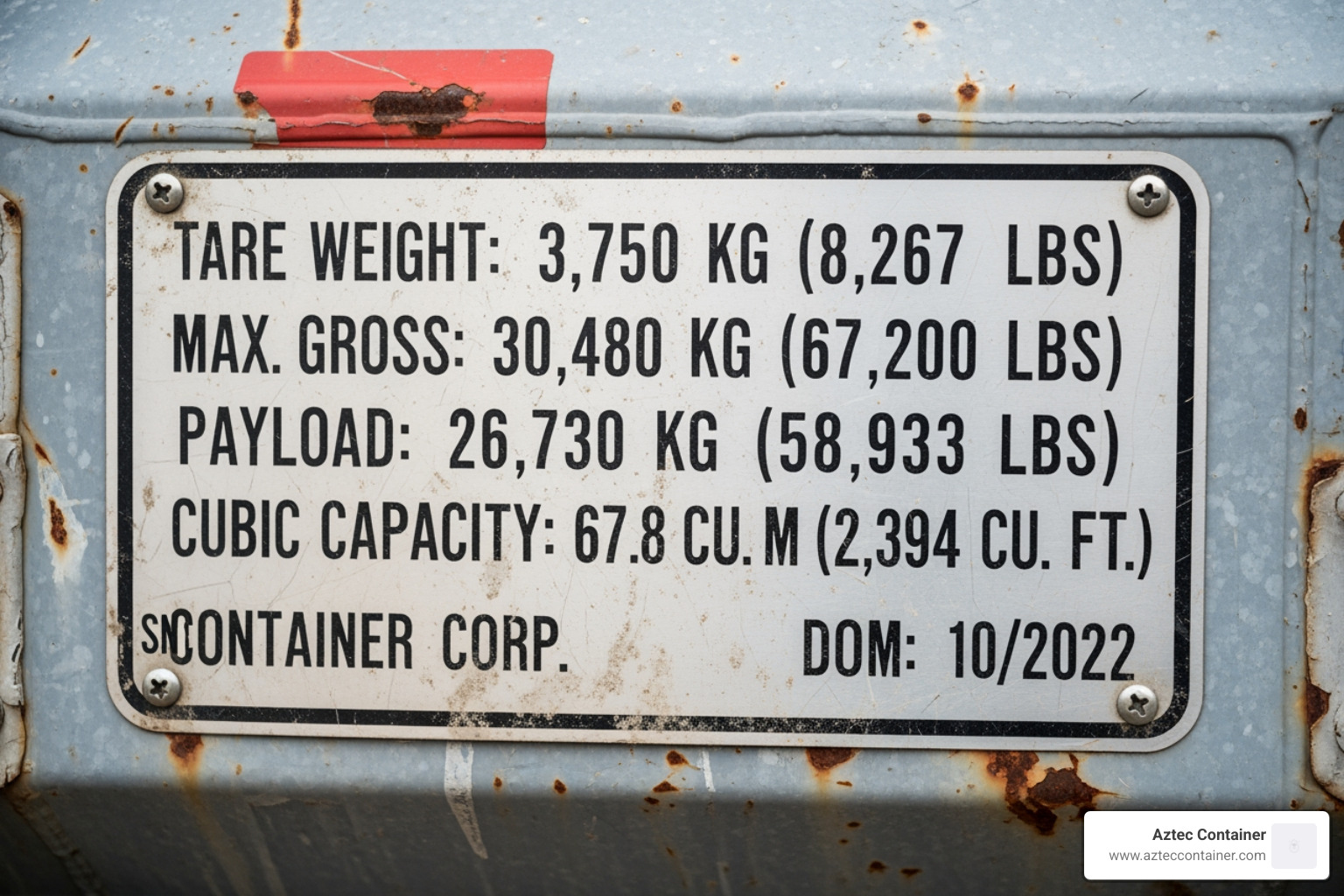
Internal and External Dimensions
Let’s explore the nitty-gritty of the dimensions. Knowing these measurements is the first step to accurately calculating your 20 foot container capacity.
Externally, a standard 20-foot dry container measures approximately:
- Length: 6.06 meters (19 feet 10.5 inches)
- Width: 2.44 meters (8 feet 0 inches)
- Height: 2.59 meters (8 feet 6 inches)
These external measurements are what define the “20-foot” designation and are crucial for transportation planning.
Internally, the usable space is slightly less due to the thickness of the steel walls and floor. The internal dimensions are generally:
- Internal Length: 5.90 meters (19 feet 4 inches)
- Internal Width: 2.35 meters (7 feet 9 inches)
- Internal Height: 2.39 meters (7 feet 10 inches)
This gives us a floor space of about 13.86 square meters (146 square feet). Imagine a small studio apartment—that’s roughly the footprint you’re working with! For more information on our 20-foot containers with cargo doors, visit our page here: More info about 20ft containers with cargo doors.
Weight and Payload Capacity
While volume gets a lot of attention, weight is often the ultimate limiting factor for a 20 foot container capacity, especially for dense goods. It’s not just about fitting everything in; it’s about ensuring the container doesn’t exceed its structural limits or legal road weight restrictions.
Here’s a breakdown of the typical weight specifications:
- Tare Weight: This is the empty weight of the container itself, usually around 2,300 kg (5,070 lbs). This weight is already substantial, highlighting the robust construction of these steel units.
- Maximum Payload: This refers to the maximum weight of cargo you can load into the container. For a 20-foot container, this is typically around 25,000 kg (55,120 lbs). Some manufacturers might list a slightly higher payload, even up to 28,130 kg, but 25,000 kg is a safe general guideline.
- Maximum Gross Weight: This is the total weight of the loaded container (tare weight + payload). It’s generally capped around 28,000 kg (61,730 lbs).
While a container might be rated for a certain maximum gross weight, local road regulations in places like Arizona, California, Colorado, or Texas may impose lower limits on trucks transporting these containers. Always double-check these local weight limits to avoid fines and logistical headaches. For a deeper dive into the standards governing these capacities, you can explore the ISO’s container standards: ISO’s container standards are nothing but good news.
Volume and Door Opening
Now for the fun part: how much can you actually stuff into this steel box? The theoretical internal volume of a 20-foot container is approximately 33.2 cubic meters (1,172 cubic feet). This is the number you get when you multiply the internal length, width, and height.
However, as we mentioned in the intro, the usable volume is usually a bit less—typically ranging from 28 to 30 cubic meters (990 to 1,060 cubic feet). This reduction accounts for the realities of packing: irregularly shaped items, the need for dunnage (packing materials to secure cargo), and ensuring there’s enough space to safely maneuver items.
Don’t forget the door! The dimensions of the door opening are critical, especially for bulky items.
- Door Opening Width: 2.34 meters (7 feet 7 inches)
- Door Opening Height: 2.28 meters (7 feet 5 inches)
This means that even if an item theoretically fits within the container’s internal dimensions, it must also fit through the door. It’s like trying to get a couch through a narrow hallway – sometimes a little wiggle room is all you need, but sometimes it just won’t budge!
Beyond the Numbers: What Actually Fits Inside?
Understanding the raw specifications of 20 foot container capacity is one thing, but visualizing what those numbers mean in real-world terms is another. As we’ve discussed, there’s a significant difference between theoretical volume and usable volume. Our goal isn’t just to tell you the numbers; it’s to help you practically apply them to your storage or shipping needs. Packing efficiency plays a huge role here, turning a mere measurement into a strategic game of Tetris.
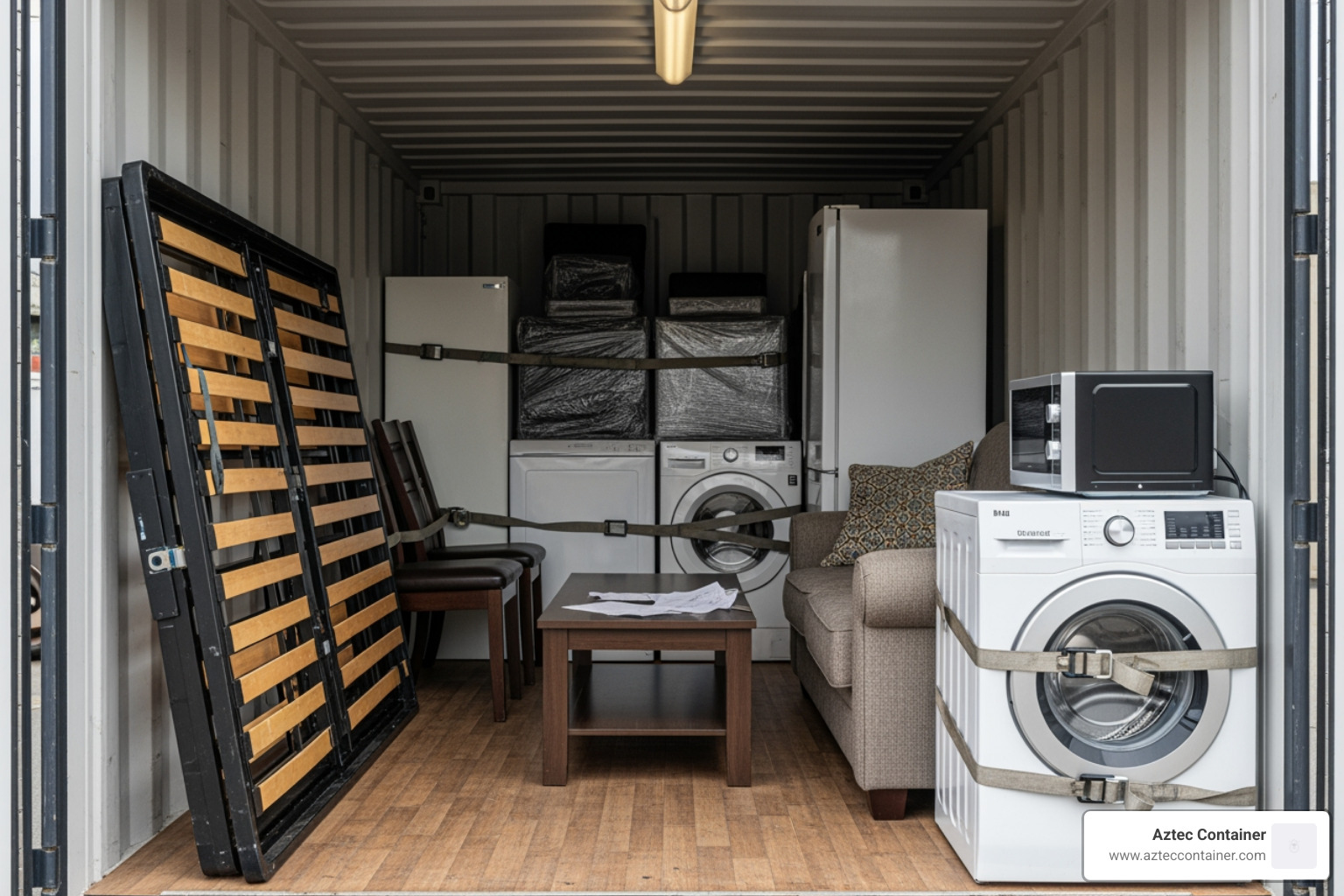
How many pallets can you fit in a 20-foot container?
Palletized cargo is common in commercial shipping and storage, offering uniformity and ease of handling. The number of pallets you can fit depends on their size and how you arrange them.
- Standard American Pallets (40″ x 48″): You can typically fit 10 of these pallets in a single layer. This usually involves two rows of five pallets.
- Euro Pallets (80 cm x 120 cm): These slightly smaller pallets are more common in Europe but are sometimes used for international shipments. You can fit 11 Euro pallets in a 20-foot container, often by alternating their orientation (length- and cross-wise).
These figures assume no stacking. If your cargo is sturdy enough to be stacked, you can significantly increase the total volume of goods, provided you don’t exceed the container’s weight limits. However, for storage purposes, stacking can sometimes make access more challenging.
Common Goods and Household Items
The versatility of the 20-foot container makes it suitable for a wide array of goods.
- Residential Moves: For those relocating across Arizona, heading to a new home in Nevada, or moving within California, a 20-foot container is often perfect for a one- to two-bedroom apartment or a small house. This includes furniture, appliances, boxes of personal effects, and more. It’s our most popular size for personal storage and moving.
- Commercial Goods: Businesses across the country, from Idaho to Texas, frequently use 20-foot containers for consolidating shipments of various commercial goods. This can include anything from textiles and electronics to machinery, raw materials like iron, or even building supplies for a construction site. It’s particularly favored for heavy, dense cargo where weight is a primary concern.
- Fun Examples: To really put 20 foot container capacity into perspective, imagine this: a single 20-foot container could theoretically hold 200 full-sized mattresses, 48,000 bananas, 50-60 refrigerators, or even 400 flat-screen TVs! While you’re probably not shipping that many bananas, these examples highlight the impressive volume these containers offer for various products. They’re also great for temporary storage during events or festivals. Learn more about our storage containers for events: More info about storage containers for events.
Shipping a Vehicle in a 20-Foot Container
Yes, you can absolutely ship a car in a 20-foot container! Most standard-sized cars, SUVs, or light trucks will fit comfortably inside. This is a popular option for individuals moving to new states like Utah or New Mexico, or for car enthusiasts transporting a prized possession.
When shipping a vehicle, proper securing and bracing are non-negotiable. The car needs to be driven in, positioned centrally, and then securely fastened using straps and wheel chocks to prevent any movement during transit. This ensures both the vehicle and the container remain undamaged.
The best part? After loading your vehicle, there’s usually still significant space available for other personal effects, boxes, or even extra parts. This makes the 20-foot container a highly efficient choice for combined vehicle and household good shipments. For more details on safely storing your vehicle, check out our car storage container options: More info about car storage containers.
How to Maximize Your 20 Foot Container Capacity
Getting the most out of your 20 foot container capacity isn’t just about throwing things in and hoping for the best. It requires strategic loading and careful consideration of weight distribution. Think of it as a puzzle where every piece needs to fit just right, not only to maximize space but also to ensure the safety and integrity of your cargo during transit or storage. Improper loading can lead to damaged goods, container instability, and even legal issues if weight limits are exceeded.
Packing Methods and Their Impact on Usable Space
The way you pack your container can drastically affect how much usable space you have.
- Loose-Loaded Cargo: This method involves individually placing items into the container without pallets. While it might seem like you’re using every inch, irregularly shaped items can create significant “dead space” if not packed efficiently. It often requires more manual labor for loading and unloading but can be effective for maximizing volume with careful planning and proper stacking.
- Palletized Shipments: As discussed, pallets offer uniformity and make handling with forklifts easier. However, the pallets themselves take up space. While you lose some cubic volume to the pallets, you gain in stability and speed of loading/unloading. This is ideal for commercial goods that are already palletized.
- Professional Stuffing: For complex or high-value shipments, professional stuffing services can make a huge difference. Experts know how to efficiently arrange and secure cargo, using techniques like blocking and bracing to prevent movement. This method is particularly beneficial for maximizing usable space and ensuring cargo safety.
- Disassembling Furniture: For household goods, disassembling items like bed frames, tables, and even some sofas can dramatically increase your usable space. Flat-pack items take up far less volume than their assembled counterparts, allowing you to fit more into your 20-foot container. Always keep all hardware organized and labeled for easy reassembly!
Common Mistakes to Avoid When Loading
We’ve seen it all, and trust us, avoiding these common mistakes will save you a lot of headaches:
- Uneven Weight Distribution: This is a big one. Placing all heavy items at one end or on one side can create an imbalance, making the container unstable during transport and potentially damaging the container floor. Always distribute heavy items evenly across the container’s floor space.
- Forgetting Dunnage or Straps: Don’t just stack and hope! Use packing materials like blankets and cardboard to fill gaps and prevent items from shifting and rubbing against each other. Ratchet straps or air bags are essential for securing dense cargo, especially for items that could shift during movement.
- Ignoring Moisture Control: Especially for long-term storage or inter-state shipping across varying climates, moisture can be a silent killer. Use desiccants (moisture-absorbing packets) and shrink-wrap to protect moisture-sensitive items.
- Overlooking Road Weight Limits: While your container has a maximum payload, the actual weight allowed on roads for transport can be lower, varying by state and local regulations in places like California or Colorado. Always check these limits beforehand to avoid penalties and delays.
- Improper Labeling for Hazardous Goods: If you’re shipping any hazardous materials (e.g., certain chemicals, flammables), proper labeling is not just a recommendation—it’s a legal requirement. Always adhere to IMDG-compliant labeling for hazardous goods: IMDG-compliant labelling for hazardous goods.
Is a 20-Foot Container Right for You?
Choosing the right container size is a pivotal decision that impacts both logistics and cost. The 20 foot container capacity offers a sweet spot for many, but it’s not a one-size-fits-all solution. Your decision should hinge on several factors: the total size and weight of your shipment, the type of cargo you’re moving or storing, and even the accessibility of your delivery or storage site. We’re here to help you steer these choices.
When to Choose a 20-Foot Container
The 20-footer is a champion in specific scenarios:
- Heavy, Dense Cargo: If your goods are compact but heavy – think machinery, raw materials, or even dense commercial products – the 20-foot container is often the most suitable choice. You’re more likely to hit the weight limit before you fill the volume, making a larger container inefficient. It’s the preferred choice for industrial clients in Arizona and Nevada moving specialized equipment.
- Smaller Commercial Shipments: For businesses consolidating smaller batches of goods, the 20-foot container provides ample space without the commitment of a much larger 40-foot unit. This is ideal for inventory management or distributing goods to various locations in Montana or Utah.
- Partial Household Moves: As mentioned, it’s perfect for a 1-2 bedroom apartment or a partial household relocation. If you’re downsizing or just moving essential items, the 20 foot container capacity offers enough space without paying for unused volume.
- Limited Space at Delivery Site: The smaller footprint of a 20-foot container makes it much more maneuverable, especially in urban areas or tight construction sites. If you have limited space for container placement in, say, a busy California city or a remote Idaho property, the 20-footer is usually the easiest to accommodate.
20-Foot vs. 40-Foot Container: A Quick Comparison
Often, the choice comes down to the 20-foot versus the 40-foot container. While the 40-foot container offers roughly double the volume, it doesn’t necessarily offer double the payload capacity, making the 20-foot unit surprisingly efficient for heavy goods.
| Specification | 20-Foot Container | 40-Foot Container |
|---|---|---|
| Internal Volume | ~33.2 m³ (1,172 cu ft) | ~67.7 m³ (2,389 cu ft) |
| Max Payload | ~25,000 kg (55,120 lbs) | ~27,600 kg (61,200 lbs) |
| Pallet Capacity (Standard) | 10 pallets | 22 pallets |
| Best Use Case | Heavy, dense cargo; 1-2 bed apt; limited space | Bulky, light cargo; 3-4 bed house; large commercial shipments |
For extremely bulky but lightweight items, a 40-foot container might be more cost-effective as you fill it by volume. However, for dense cargo, the 20-foot container often offers better value because you’ll likely reach the weight limit before filling a 40-foot container, essentially paying for unused space. For businesses considering larger solutions, we also offer More info about our 40ft office containers.
Key Factors for Shipping and Rental
When you partner with Aztec Container, we consider all your needs. We offer various types of containers, including standard dry storage, specialized refrigerated units, and even modified office containers, each with its own unique 20 foot container capacity considerations. Our expertise allows us to provide customizable solutions custom to your specific project, whether it’s for a construction job in Colorado or a long-term storage need in New Mexico.
For storage, our containers are available for purchase nationwide, including Arizona, California, Colorado, Idaho, Montana, Nevada, New Mexico, Texas, and Utah. If you’re looking to rent, our container rentals are available exclusively in California.
For specialized needs, our refrigerated containers maintain precise temperatures, making them ideal for perishable goods or sensitive materials. You can find more information about these specialized units here: More info about our refrigerated containers.
Frequently Asked Questions about 20-Foot Container Capacity
We understand that you might have more questions about maximizing your 20 foot container capacity. Here are some of the most common inquiries we receive:
How many cubic feet of usable space are in a 20-foot container?
A 20-foot container has a total volume of about 1,172 cubic feet, but due to packing inefficiencies, the practical, usable space is typically between 1,000 and 1,100 cubic feet. This difference accounts for irregular item shapes, the need for protective dunnage, and ensuring safe loading and unloading.
What is the maximum weight you can put in a 20-foot container?
The maximum cargo weight (payload) you can put in a 20-foot container is around 25,000 kg (55,120 lbs). However, this is the container’s structural limit. The legal weight limit for road transport can often be lower, varying significantly by state and local regulations in places like California, Texas, or Arizona. It’s crucial to check these local regulations, as they will be the real constraint for overland transport.
Can a 20-foot container hold a car and household goods?
Yes, absolutely! A standard car fits comfortably inside a 20-foot container, leaving significant space for boxes and other household items. It’s crucial to properly secure the vehicle with straps and chocks to prevent any movement during transit. Additionally, ensure you distribute the remaining weight of your household goods evenly around the vehicle to maintain balance and prevent any issues during transport.
Your Partner for Secure and Reliable Storage
Understanding 20 foot container capacity is key to efficient logistics and successful projects. As we’ve explored, these versatile units offer a robust solution for a wide range of needs, from residential moves to commercial storage and shipping. Their standardized dimensions and impressive payload capacity make them an indispensable asset in today’s interconnected world.
At Aztec Container, we pride ourselves on providing high-quality, reliable, and customizable container solutions across Arizona, California, Colorado, Idaho, Montana, Nevada, New Mexico, Texas, and Utah. Our team is dedicated to helping you make informed decisions, ensuring you get the right container with the right capacity for your specific requirements.
Ready to optimize your storage or shipping? Explore our 20-foot container options for your storage needs: Explore our 20-foot container options for your storage needs.