


The Compact Cold Storage Solution You Need
Looking for 10 foot reefer containers for sale? Here’s what you need to know:
- Capacity: 12-15.8 cubic meters (440-558 cubic feet)
- Temperature Range: -40°C to +25°C (-40°F to +77°F)
- Power Requirements: 32A 5-pin power supply, three-phase 360/460V AC
- Pallet Capacity: Up to 5 Euro pallets (1200 x 800mm) in a single tier
- Best For: Events, restaurants, small businesses, and locations where larger containers won’t fit
10 foot reefer containers for sale offer powerful refrigeration in a compact footprint. These miniature cold-storage powerhouses deliver the same temperature control capabilities as their larger cousins but in a space-efficient package that’s perfect for tight locations or smaller cooling needs.
Unlike standard shipping containers, reefers feature specialized insulation, stainless steel food-grade interiors, and powerful refrigeration units capable of maintaining precise temperatures from deep freeze to mild warmth. This versatility makes them ideal for everything from event catering and restaurant overflow storage to laboratory sample preservation.
What makes the 10-footer special is its maneuverability and placement options. When space is at a premium or a 20ft container simply won’t fit, these compact units deliver the same cooling performance without the spatial commitment.
I’m Steve Hyndman, Vice President of Aztec Container with nearly 30 years of experience helping businesses find the perfect storage solutions, including 10 foot reefer containers for sale that meet precise temperature control requirements in challenging spaces.

10 foot reefer containers for sale helpful reading:
– 40 ft reefer containers for sale
– stainless reefer for sale
10 foot reefer containers for sale: Quick Specs & Buying Checklist
Shopping for 10 foot reefer containers for sale? Let me walk you through what makes these compact cooling powerhouses so special. Despite their small footprint, these units deliver impressive refrigeration capabilities that might surprise you!
A standard 10ft reefer offers between 12-15.8 cubic meters of internal space (that’s about 440-558 cubic feet). Don’t let the size fool you – these ISO-certified units pack a serious punch when it comes to temperature control. They can maintain environments anywhere from a deep freeze of -40°C all the way up to a warm +25°C (-40°F to +77°F). That’s versatility you can count on!
Power-wise, you’ll need a 32A 5-pin power supply, as these units operate on three-phase 360/460V AC, 50 Hz. It’s worth checking your site’s electrical setup before delivery day to avoid any surprises.
For businesses wondering about capacity, a 10ft reefer comfortably fits 5 Euro-pallets (those are the 1200 x 800mm ones) in a single layer. Perfect for restaurants, event caterers, or specialty food businesses who need reliable cold storage without sacrificing precious space.
| Feature | New 10ft Reefer | Used 10ft Reefer |
|---|---|---|
| Temperature Range | -40°C to +25°C | Typically -25°C to +25°C |
| Refrigeration Unit | Thermo King Magnum Plus (or equivalent) | Varies by model year |
| Warranty | 5-year machinery warranty | 3-month spare parts warranty |
| Interior Condition | Pristine stainless steel | Serviceable with potential wear |
| Energy Efficiency | Highest available | May be less efficient |
| Pre-Trip Inspection | Factory certified | Performed before sale |
| Average Lifespan | 10-15 years | Depends on previous usage |
Key Dimensions of 10 foot reefer containers for sale
Let’s talk about fitting your 10 foot reefer container for sale into your available space. This is where careful measurement becomes your best friend!
The external dimensions you need to plan for are 2,991mm length × 2,438mm width × 2,591mm height (that’s roughly 9’10” × 8′ × 8’6″). This compact footprint is precisely why these units work so beautifully in tight urban spaces or smaller facilities where every inch counts.
Inside, you’ll have usable dimensions of approximately 2,790mm length × 2,286mm width × 2,269mm height (about 9’2″ × 7’6″ × 7’5″). The door opening is generous at 2,286mm × 2,260mm (7’6″ × 7’5″), making loading and unloading your temperature-sensitive items a breeze.
Need a bit more height? High-cube variants add an extra 300mm (about a foot) of interior headroom while keeping the same footprint. That vertical bonus can make all the difference for certain products or when you’re trying to maximize your storage capacity.
Temperature & Capacity Specs of 10 foot reefer containers for sale
The temperature control capabilities of 10 foot reefer containers for sale are truly remarkable. These compact units maintain temperatures from -40°C to +25°C (-40°F to +77°F) with impressive precision – typically staying within ±1°C of your set point.
This versatility means one container can handle everything from deep freezing ice cream and seafood (-40°C to -20°C), to standard freezing for most foods (-20°C to -10°C), to perfect refrigeration for produce and dairy (0°C to +10°C). Some customers even use the warming range (+10°C to +25°C) to protect sensitive products in cold weather.
Power consumption averages around 4.6 kW per hour, though this varies based on your target temperature, the weather outside, and how often you’re opening those doors. Modern units include smart energy-saving features like standby mode that kicks in once your set temperature is reached.
With approximately 500 cubic feet of temperature-controlled space, you’ll have room for those 5 Euro pallets we mentioned earlier. Beyond just temperature, these units also offer humidity control ranging from 50% to 99% – critical for maintaining the quality of many perishable goods.
For businesses serious about cold chain integrity, these specifications ensure your products remain in perfect condition throughout storage. The science behind effective cold storage is fascinating and well-documented for those interested in diving deeper.
Scientific research on cold-chain basics
Choosing the Right 10 ft Reefer: Applications & Advantages
When you’re looking at 10 foot reefer containers for sale, you’ll be amazed at just how versatile these compact powerhouses really are. Their small footprint combined with serious cooling capabilities opens up possibilities across numerous industries.
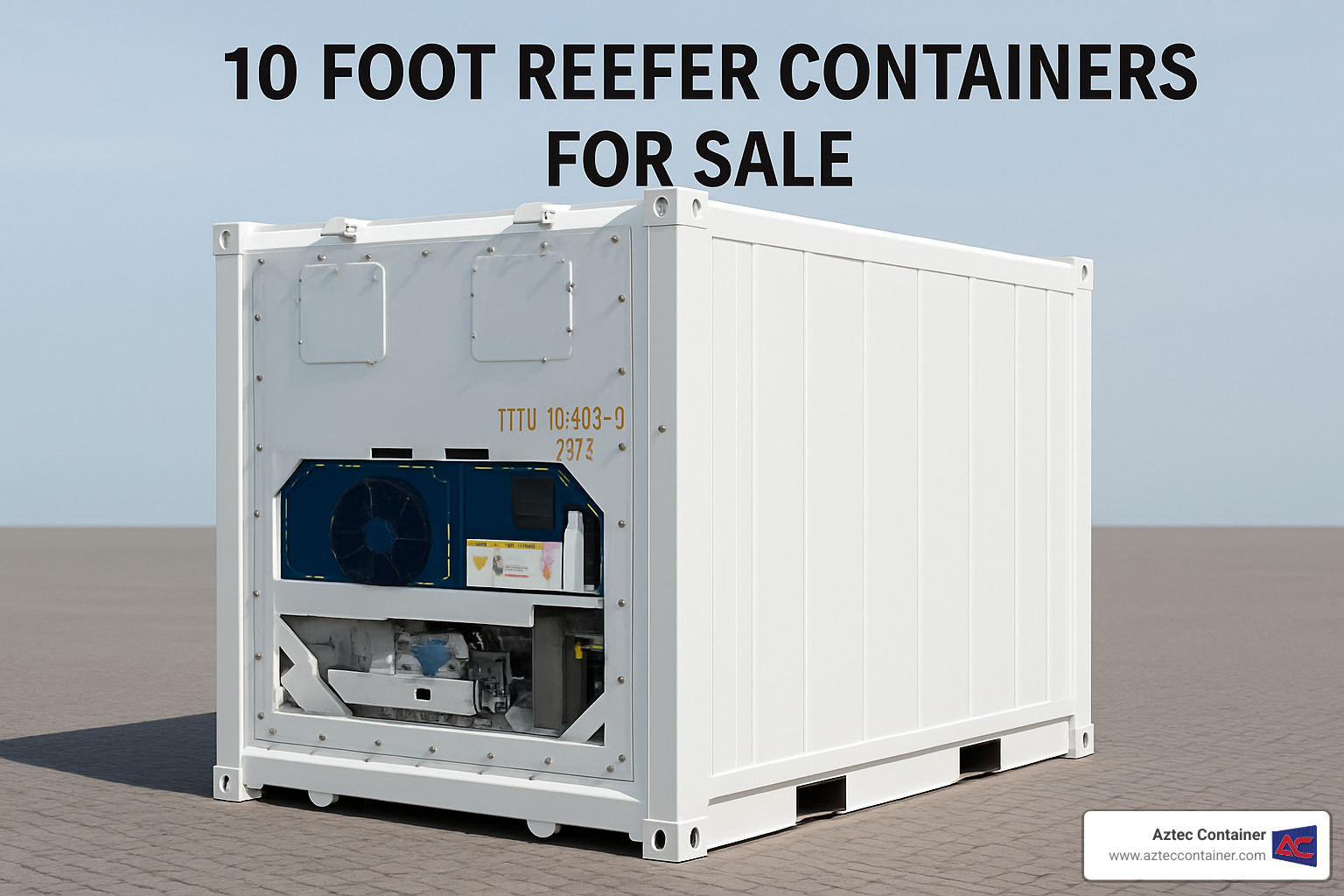
Event planners and caterers love these units because they can place them exactly where needed – right next to that outdoor wedding tent or festival booth. Imagine serving perfectly chilled champagne or keeping your gourmet ice cream at the ideal consistency even on a hot summer day. That’s the magic of having refrigeration exactly where you need it.
Restaurant owners with cramped kitchens often tell us how these containers have been game-changers. Rather than turning away deliveries or limiting menu options, they can expand their cold storage capacity without knocking down walls. The food-grade stainless steel interior keeps health inspectors happy, while chefs appreciate knowing their premium ingredients stay at the perfect temperature.
In the biotech and pharmaceutical world, these containers have found an unexpected home. When lab space is tight but temperature control is non-negotiable, a 10ft reefer can be the perfect solution for sample storage or creating a controlled environment for certain testing protocols.
Perhaps the biggest advantage we hear from customers is simply that these units fit where nothing else will. In crowded urban settings, narrow alleyways, or tight parking lots, the compact footprint makes all the difference. We’ve helped countless businesses add cold storage in spaces they thought were impossible to use.
Smart business owners also appreciate the potential tax benefits. These containers may qualify for Section 179 deductions, allowing you to write off the full purchase price in the year you buy it rather than depreciating it over time. It’s worth discussing with your accountant how this might benefit your specific situation.
The portability factor can’t be overstated either. Unlike built-in cold rooms that become part of your building, these containers can move with your business. Relocating? Reorganizing your space? No problem – your cold storage investment comes along for the ride.
qualify for write offs and tax deductions
More info about storage uses
When a 10 ft Beats a 20 ft
There are certain situations where smaller is definitely better, and choosing a 10ft reefer over a 20ft model makes perfect sense:
Working with tight footprints is the most obvious scenario. I’ve personally helped clients in downtown areas of San Francisco and Los Angeles place these compact units in spaces where they swore nothing would fit. That narrow gap between buildings or that small corner of your property suddenly becomes valuable real estate when you’re working with a 10ft container.
Your wallet will appreciate the lower freight costs associated with moving these smaller units. Whether you’re having it delivered initially or relocating it later, transportation expenses typically run lower than with larger containers. For businesses watching their bottom line, this can be a significant advantage.
The ease of quick crane and forklift operations is another practical benefit. Weighing in at about 2,290 kg (5,050 lbs), these containers can be handled by smaller equipment, making placement less complicated and often less expensive. This can be especially important in locations with limited access for heavy machinery.
I love talking to customers about modular pairing possibilities. As your business grows, two 10ft units often provide more flexibility than a single 20ft container. You can place them in different locations, arrange them to fit unusual spaces, or even keep one at your main location and deploy the second at events or secondary sites. It’s like having cooling capacity that follows your actual needs rather than being stuck in one place.
For new businesses or those testing a concept, starting with a 10ft unit lets you dip your toe in the water without overcommitting. You can add additional units as you grow, creating a scalable solution that evolves with your business.
Creative Conversions: Offices, Guard Shacks, Labs
The beauty of 10 foot reefer containers for sale goes well beyond their cooling capabilities. Their built-in insulation and sturdy construction make them perfect candidates for creative conversions that might surprise you.
The existing insulation in these containers (typically offering an impressive R-value of 28+) gives you a massive head start on creating a comfortable controlled environment. Think about it – the same features designed to keep cold air in can be repurposed to maintain any temperature you want. It’s like getting the expensive part of a building conversion already done for you.
Many customers opt for an HVAC retrofit, replacing the refrigeration system with a standard air conditioner or mini-split unit. This transforms the space into a cozy office or workspace that stays comfortable year-round. The superior insulation means lower energy bills too – something everyone can appreciate in today’s economy.
Adding a roll-up door is another popular modification that completely changes how the space functions. Unlike the standard swing doors that need clearance to open, roll-ups maximize your usable space and provide a more conventional entrance. For retail applications or frequent access, this small change makes a huge difference in usability.
Proper lighting upgrades transform the interior from a storage space to a functional work environment. We’ve seen amazing conversions where strategically placed LED lighting systems create bright, energy-efficient spaces that feel nothing like the container they started as.
Over the years, we’ve helped customers turn these units into everything from secure guard shacks with excellent visibility to field laboratories for agricultural research. Some tech companies have even used them as specialized server rooms, taking advantage of the insulation and the option to maintain specific climate conditions.
The economic advantage here is significant – adding insulation and a vapor barrier to a standard shipping container is expensive and time-consuming. With a reefer, that work is already done, giving you a considerable head start on your conversion project.
More info about 10 ft conversions
New vs Used 10 ft Reefers: Pricing, Warranty & Power Needs
When shopping for 10 foot reefer containers for sale, one of the biggest decisions you’ll face is whether to go new or used. Trust me, both options have their merits depending on your specific situation and budget.
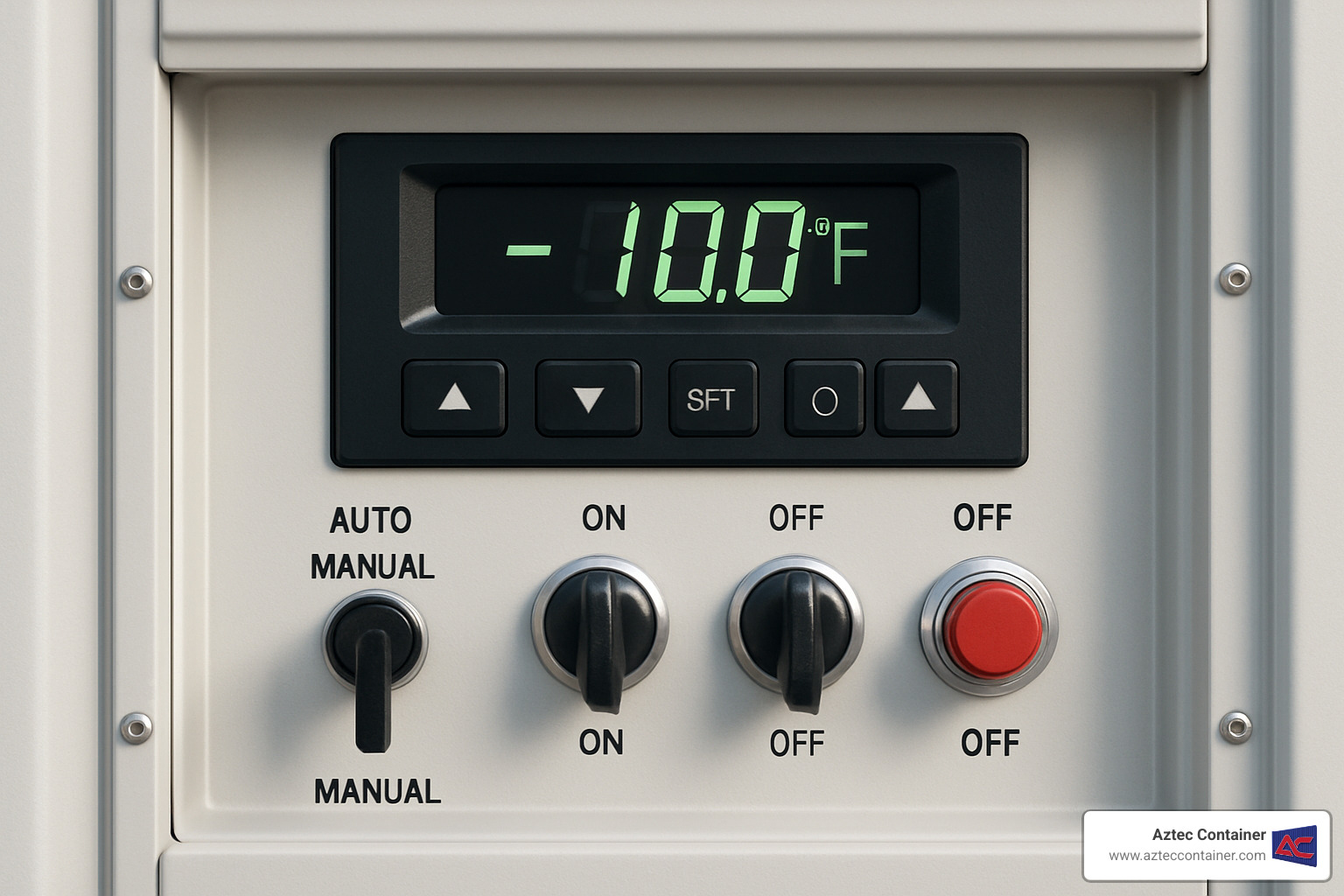
New 10ft reefers come with all the bells and whistles – typically featuring cutting-edge Thermo King Magnum Plus units or similar top-tier refrigeration systems. The best part? They include a comprehensive 5-year machinery warranty from the manufacturer. There’s something reassuring about being the first owner of equipment that will be protecting your valuable temperature-sensitive products.
Used containers, on the other hand, can save you a significant chunk of change while still delivering reliable performance. We make sure all our pre-owned units undergo rigorous Pre-Trip Inspections (PTI) and typically include a 3-month spare parts warranty. While the refrigeration units may have some miles on them, they’re thoroughly tested to ensure they’ll keep your goods at the perfect temperature.
When it comes to power requirements, both new and used units speak the same language. You’ll need 460V three-phase power with at least a 30 Amp breaker. Running on 208/230V AC? Then you’re looking at a minimum 50 Amp breaker and possibly a transformer. This is crucial information when planning your installation site – I’ve seen too many customers get caught off-guard by these requirements!
No access to three-phase power at your location? No problem! Generator sets (gensets) are available as add-ons in either “clip-on” or “underslung” configurations. These are particularly handy for mobile applications or remote locations where standard power hookups aren’t available.
While the refrigeration units are built tough with a voltage tolerance of ±15%, I always recommend providing stable power with proper circuit protection. A small investment in surge protection can save you thousands in potential repairs down the road.
Budgeting Your Purchase
Let’s talk dollars and sense when budgeting for your 10 foot reefer container. There’s more to consider than just the sticker price.
First, think about whether this purchase makes more sense as a capital expenditure or if leasing might better suit your needs. Running a seasonal business with fluctuating cold storage demands? Leasing provides flexibility without long-term commitment. For consistent, year-round needs, ownership typically proves more economical over time.
Financing options are available for qualified buyers, allowing you to preserve capital while still getting the cooling capacity you need. This can be a game-changer for growing businesses looking to manage cash flow effectively.
Don’t forget to factor in freight costs! Delivering these specialized units requires flatbed or tilt-bed trailers, and pricing varies based on distance and accessibility. Whether you’re in the heart of Los Angeles or the outskirts of Albuquerque, we can provide specific delivery quotes custom to your exact location throughout our service areas in the Western United States.
Site preparation is another crucial budget item that’s often overlooked. You’ll need a level surface capable of supporting approximately 2,290 kg (5,050 lbs) when empty – and that’s before you add your products! Depending on your location, you might need a concrete pad or electrical upgrades to accommodate the unit’s power requirements.
Operational costs deserve consideration too. These units draw about 4.6 kW per hour on average, though this varies with temperature settings and ambient conditions. Modern units feature energy-saving modes that can significantly reduce consumption – your wallet and the environment will thank you!
Power & Efficiency Checklist
Getting the most from your 10 foot reefer container means paying attention to power and efficiency details. I’ve helped hundreds of customers optimize their setups, and these tips can save you headaches and money.
Voltage tolerance is built into these units (±15%), but consistent power delivery will extend the life of your refrigeration system. If your location experiences significant power fluctuations, consider adding a voltage stabilizer to protect your investment.
Surge protection is non-negotiable in my book. The sophisticated electronics controlling your reefer unit are vulnerable to power surges, and replacement control boards aren’t cheap. A quality surge protector is inexpensive insurance.
Modern reefers include standby mode functionality that kicks in once your set temperature is reached. This clever feature dramatically reduces energy consumption during stable periods – I’ve seen customers cut their power bills by 20-30% just by ensuring this feature is properly configured!
I recommend conducting regular energy audits by monitoring power consumption. A sudden spike often signals maintenance issues before they become major problems. It’s like catching a cold before it becomes pneumonia.
Proper circuit sizing is essential – typically a 32A 5-pin power supply for three-phase 360/460V AC, 50 Hz operation. Undersized circuits lead to tripped breakers and temperature fluctuations that put your products at risk.
Door discipline might sound trivial, but it significantly impacts energy efficiency. Each time those doors open, you’re letting cold air escape and warm air enter. For frequently accessed units, consider adding strip curtains – they’re an inexpensive way to maintain temperature while allowing easy access.
Don’t overlook seal integrity – damaged door gaskets can leak cold air and force your unit to work harder. I recommend a monthly inspection of all seals and prompt replacement of any showing wear.
Set your temperature appropriately for your goods – don’t go colder than necessary. Each degree lower typically increases energy consumption by 2-3%, so setting -25°C when you only need -18°C wastes energy and money.
Proper defrost cycles prevent ice buildup on evaporator coils, maintaining efficiency. Most modern units handle this automatically, but it’s worth confirming your cycles are appropriately programmed.
Finally, maintain adequate ventilation clearance around the refrigeration unit. I’ve seen too many units struggling to perform because they were placed too close to walls or other obstacles that restricted airflow. Your condenser needs to breathe!
By following these guidelines, you’ll maximize efficiency while minimizing operating costs and extending your equipment’s lifespan – that’s what I call a win-win-win situation.
Delivery, Installation & Maintenance Tips
Getting your 10 foot reefer container safely delivered and properly set up is just as important as choosing the right unit in the first place. After helping hundreds of customers across the Southwest, we’ve learned a thing or two about making this process smooth and headache-free.
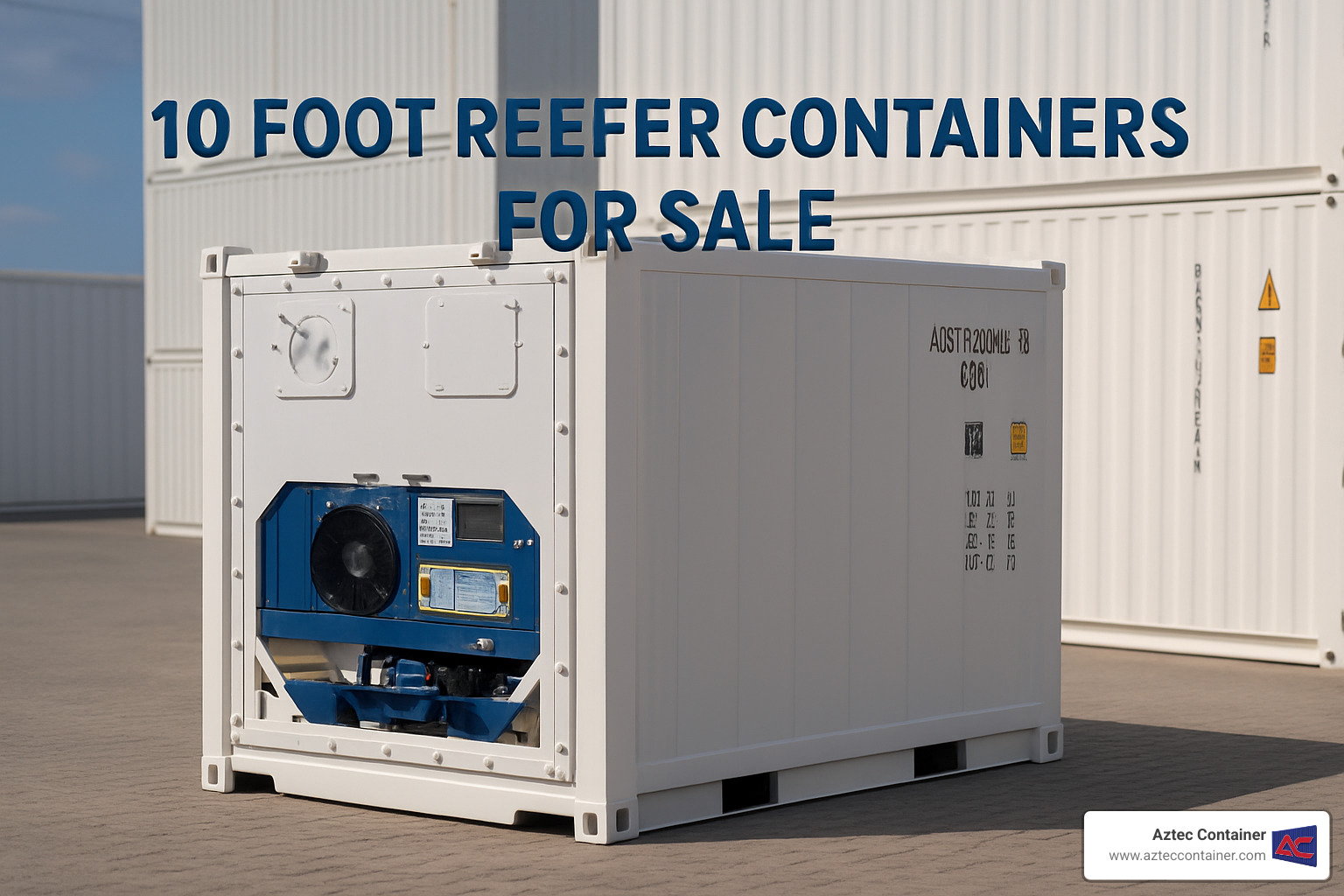
Most deliveries happen via flatbed or tilt-bed trailers – the compact size of these 10-footers is actually a huge advantage here. We’ve managed to squeeze these units into tight urban alleys and narrow driveways where larger containers simply wouldn’t go. It’s always a bit of a proud moment when we solve a seemingly impossible placement challenge!
When it comes time to lift your container into its final position, we use the designated crane lift points to ensure safe handling. At around 2,290 kg (5,050 lbs) empty, these aren’t lightweight boxes, so proper equipment is non-negotiable. Many of our customers with the right equipment opt to position their containers using forklifts with extended forks – just make sure your forklift has adequate capacity for the job.
Before any unit leaves our facility, it undergoes a thorough Pre-Trip Inspection (PTI) test. This isn’t a quick once-over – depending on the unit, this comprehensive check takes between 30 minutes and 2.5 hours. We test every system: refrigeration performance, temperature sensor accuracy, door seal integrity, and interior cleanliness. It’s like a 40-point inspection for your car, but focused on keeping your perishables at perfect temperatures.
That beautiful stainless steel interior deserves regular TLC, especially if you’re storing food products. A regular wash with food-grade cleaners keeps things sanitary and prevents odor transfer between products. Don’t forget about the aluminum floor – keeping it clean and free of debris ensures proper air circulation and prevents unwanted hot spots.
For units in regular use, we strongly recommend quarterly servicing. This includes checking refrigerant levels, cleaning those critical condenser coils, inspecting electrical connections, and verifying temperature calibration. Even the most robust systems need regular maintenance, and our nationwide service network can connect you with qualified technicians who know these systems inside and out.
With proper care, your 10 foot reefer container will provide reliable service for many years – I’ve personally seen well-maintained units still going strong after a decade or more of regular use.
Site Prep & Hook-Up
Before your 10 foot reefer container arrives, taking time to prepare your site properly will save you headaches later. Think of it as laying the groundwork for years of trouble-free operation.
First things first: you need a level surface that can handle the weight. While a concrete pad is the gold standard, well-compacted gravel or asphalt can work perfectly fine depending on your situation. Whatever you choose, make sure it extends slightly beyond the container’s footprint for stability – nobody wants to deal with a tilting refrigerator!
Airflow is absolutely critical for these units. Maintain at least 6 feet of clearance around the refrigeration machinery. I’ve seen customers try to squeeze containers against walls or fences to save space, only to have their units struggle with cooling on hot days because the condenser couldn’t breathe properly.
For power, you’ll need a 32A outlet with the right voltage configuration. Most 10 foot reefer containers for sale require three-phase 360/460V AC, 50 Hz power. If three-phase isn’t available at your location (common for smaller businesses), you might need to install a phase converter or consider a generator option. This isn’t a DIY project – have a qualified electrician familiar with industrial equipment handle the connections, and make sure everything is weatherproofed and up to local codes.
I always recommend installing a dedicated circuit breaker for your reefer. This prevents overloading your electrical system and gives you a convenient shutoff point for maintenance. It’s a small upfront cost that can prevent bigger problems down the road.
Don’t forget to leave that crucial airflow gap of at least 6 inches between your container and any adjacent structures. This prevents moisture buildup and makes it much easier to inspect the exterior for any developing issues. For containers that will be accessed frequently, especially after dark, some additional lighting around the unit is both a safety feature and a convenience your staff will appreciate.
A little preparation goes a long way – taking these steps before delivery day will ensure your container performs at its best from day one.
Preventive Care & Troubleshooting
The difference between a reefer container that lasts five years and one that lasts fifteen often comes down to how well it’s maintained. A good preventive maintenance routine doesn’t have to be complicated, but it does need to be consistent.
Door gasket checks should become a monthly habit. These rubber seals are your first defense against temperature loss, and they take a beating with regular use. Run your hand along the gaskets feeling for cracks or tears, and check for proper compression when the doors are closed. Clean them gently with mild soap and water – harsh chemicals can deteriorate rubber over time. If you spot damage, replace the gaskets immediately – the energy savings will quickly offset the replacement cost.
Defrost cycles are easily overlooked until they become a problem. Most 10 foot reefer containers for sale have automatic defrost systems, but they still need monitoring. Take a flashlight and inspect the evaporator coils periodically – excessive ice buildup is a red flag that something’s not working right. Make sure the defrost drain is clear too; a blocked drain can cause water to refreeze inside your unit, creating a cascade of problems.
Sensor calibration might sound technical, but it’s essential for accurate temperature control. At least once a year, verify your unit’s temperature readings against a reliable calibrated thermometer. If you’re noticing discrepancies of more than a degree or two, it’s time for recalibration. Many modern units allow for field adjustment, but some may require a service technician with specialized equipment.
When parts need replacing, stick with components from the OEM parts network. I’ve seen too many customers try to save a few dollars with generic parts, only to face compatibility issues or premature failures. Quality parts from authorized suppliers for major brands like Thermo King and Carrier might cost a bit more upfront, but they’re designed specifically for your system.
If you encounter problems, a systematic troubleshooting approach works best:
When a unit stops cooling properly, first check the basics – power supply, circuit breakers, and phase sequence. Verify your temperature settings haven’t been accidentally changed and that the unit isn’t stuck in defrost mode.
Unusual noises should never be ignored – they’re your unit’s way of crying for help. Loose mounting hardware, damaged fan blades, or compressor issues often announce themselves with distinctive sounds before causing complete failure.
Water leakage usually points to either a blocked defrost drain or door seal issues. Check that your container is sitting level too – even slight tilting can prevent proper drainage.
High energy bills might indicate door seal problems, dirty condenser coils that need cleaning, potential refrigerant leaks, or simply inappropriate temperature settings for your cargo.
Building a relationship with qualified refrigeration technicians who understand container systems is invaluable. They can spot developing problems during routine maintenance before they become expensive emergencies, helping you maximize your investment for years to come.
Frequently Asked Questions about 10 ft Reefers
Can I ship a single 10 ft reefer internationally?
This is one of the most common questions we hear, and unfortunately, the answer is no. Standard international shipping methods simply aren’t designed to accommodate single 10ft reefer containers. The global shipping infrastructure is built around 20ft and 40ft ISO containers as the minimum standard sizes.
If you absolutely need to move your 10ft reefer internationally, you’d need to either pair it with another 10ft container (creating a 20ft equivalent unit) or ship it as break-bulk cargo. This second option typically costs significantly more and offers less protection for your container.
The limitation exists because ports worldwide use standardized handling equipment and stacking systems specifically designed for 20ft and 40ft units. While your 10 foot reefer container for sale meets all ISO standards for construction quality, its non-standard length makes it impractical for regular shipping routes.
For most of our customers across Arizona, California, Colorado, Idaho, Montana, Nevada, New Mexico, Texas, and Utah, this isn’t a concern since the containers remain within our service region. However, if future international relocation might be in your plans, this factor could influence your decision between a 10ft and 20ft unit.
What power cord and plug do I need?
Getting the right power connection for your 10 foot reefer container for sale is absolutely critical for proper operation. You’ll need a heavy-duty power cord rated specifically for your unit’s electrical demands – typically a 32A 5-pin power cord compatible with three-phase 360/460V AC, 50 Hz power.
The exact plug configuration will depend on your local electrical standards and how you plan to use the container. Maritime transport requires different plugs than land-based applications, so be sure to let us know your intended use when purchasing so we can provide the correct plug type or advise on necessary adaptations.
For most permanent installations, we strongly recommend having a qualified electrician install a dedicated outlet matching your container’s specific requirements. This ensures proper grounding and circuit protection while meeting all local electrical codes – something that gives our customers peace of mind.
If you’re planning to move your reefer between locations with different power setups, investing in quality adapter cables is worth every penny. These allow for flexibility while maintaining safe electrical connections no matter where you set up.
I’ve seen how improper electrical connections can damage refrigeration units and create safety hazards – it’s definitely worth doing right from the beginning!
How quickly can it cool down to –20 °F?
When customers ask about cool-down times, I always explain that it depends on several key factors – starting temperature, ambient conditions, and the specific refrigeration unit installed in your 10 foot reefer container for sale.
On average, a properly functioning 10ft reefer with a quality refrigeration unit like a Thermo King Magnum Plus can cool down from room temperature (around 70°F/21°C) to a deep freeze of –20°F (–29°C) in approximately 6-8 hours when empty. That timeframe increases significantly once you load it with product, as the system must remove heat from both the air and your goods.
For the best performance and faster cool-down times, I recommend these practical steps:
1. Pre-cool your container for at least 24 hours before loading temperature-sensitive products
2. Load already-cooled items rather than warm products whenever possible
3. Follow proper loading guidelines that allow air to circulate freely around your products
4. Minimize door openings during the cool-down process
5. When possible, avoid loading during extremely hot weather conditions
Modern refrigeration units include special “pull-down” modes designed specifically for rapid temperature reduction. These temporarily boost compressor performance to accelerate cooling, then automatically switch to normal operation once they reach your target temperature – a clever feature that saves both time and energy.
It’s worth noting that running continuously at very low temperatures like –20°F demands more energy and puts additional strain on the refrigeration system. If you only occasionally need such deep freezing capabilities, consider a unit with a wider temperature range to ensure reliable long-term performance.
More info about refrigerated steel containers
Conclusion & Next-Steps
Throughout this guide, we’ve explored the impressive capabilities packed into these miniature cold-storage powerhouses. 10 foot reefer containers for sale truly offer the perfect balance of powerful cooling performance and space-saving design for businesses facing tight space constraints.
These compact-cooling champions deliver remarkable temperature control from deep freezing at -40°C all the way up to mild warming at +25°C. Whether you’re preserving ice cream at a festival, storing restaurant overflow, or maintaining laboratory samples, these versatile units handle it all with precision.
As you prepare to make your purchase, keep this simple buying-checklist in mind:
First, measure twice and buy once. Take careful measurements of your available space, remembering to account for the full external dimensions plus necessary clearance for airflow and maintenance access.
Second, evaluate your power situation. Most reefers need three-phase power, so determine if your site has the right electrical setup or if you’ll need adaptors or electrical work before delivery.
Third, weigh the benefits of new versus used based on your specific needs. New units offer longer warranties and the latest technology, while quality used units can provide significant savings while still delivering reliable performance.
Fourth, be realistic about your temperature requirements. While these units can maintain temperatures from -40°C to +25°C, running at extreme temperatures increases energy consumption and wear on the system.
Don’t forget to plan for smooth delivery by ensuring proper site access and preparation. A level surface capable of supporting the container’s weight is essential for optimal performance.
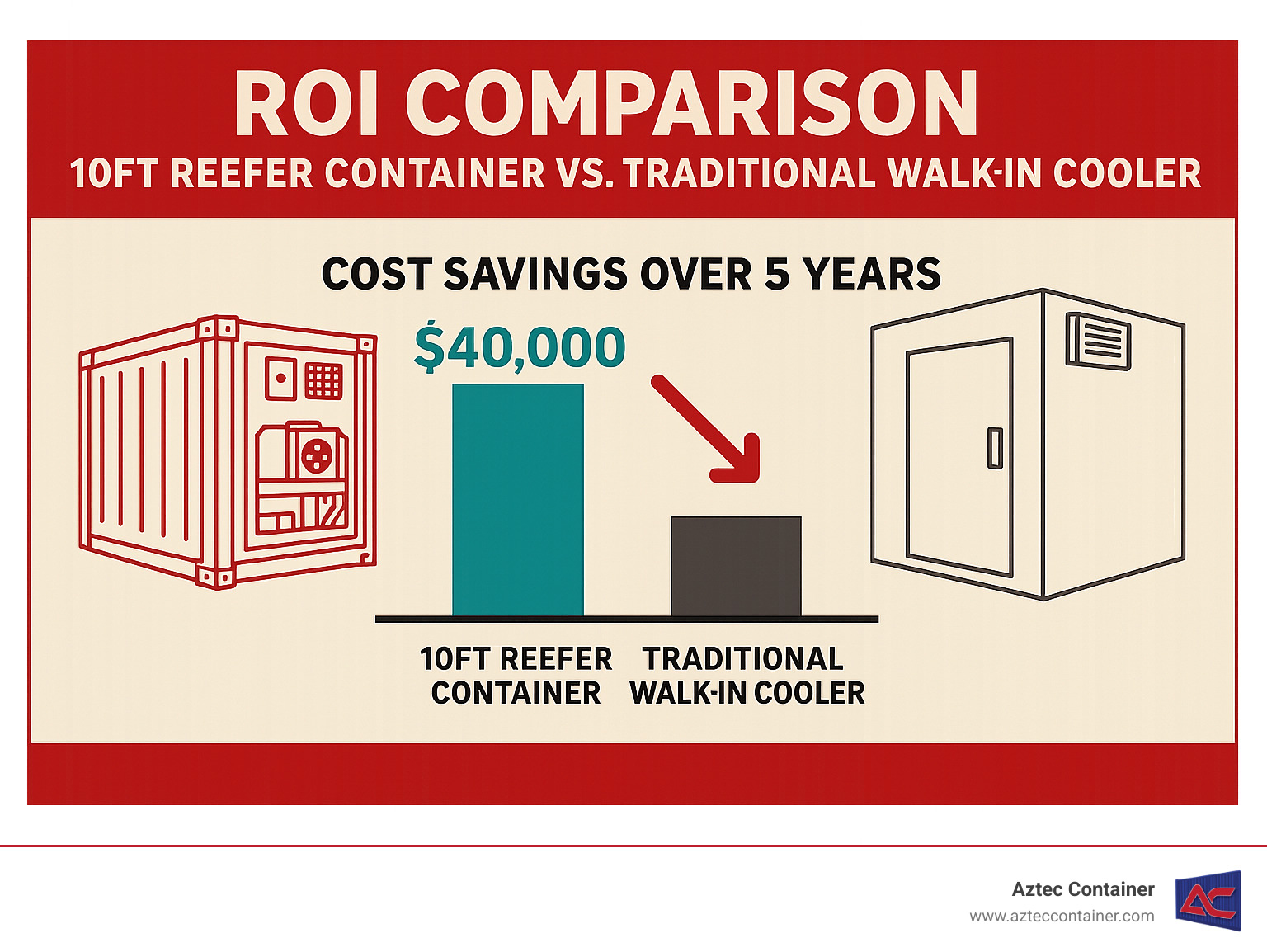
Finally, remember to budget beyond the purchase price. Factor in ongoing maintenance, energy costs, and potential tax benefits when calculating the true cost of ownership.
At Aztec Container, we take pride in matching customers across Arizona, California, Colorado, Idaho, Montana, Nevada, New Mexico, Texas, and Utah with the perfect refrigerated container for their unique needs. Our comprehensive warranty-support gives you peace of mind, while our nationwide service network ensures help is always available when you need it.
Whether you’re looking for a temporary cooling solution or a permanent addition to your business infrastructure, a 10ft reefer container offers an efficient, flexible answer that combines serious cooling power with a footprint that works almost anywhere.
More info about refrigerated steel containers
Ready to find the perfect 10 foot reefer container for sale that meets your specific cooling needs? Our friendly team is just a phone call away, ready to discuss your requirements and help you make the smart choice for your business.