


Seamless Container Moving: Get Your Free Quote Today
Why Reliable Container Transport Services Matter for Your Business
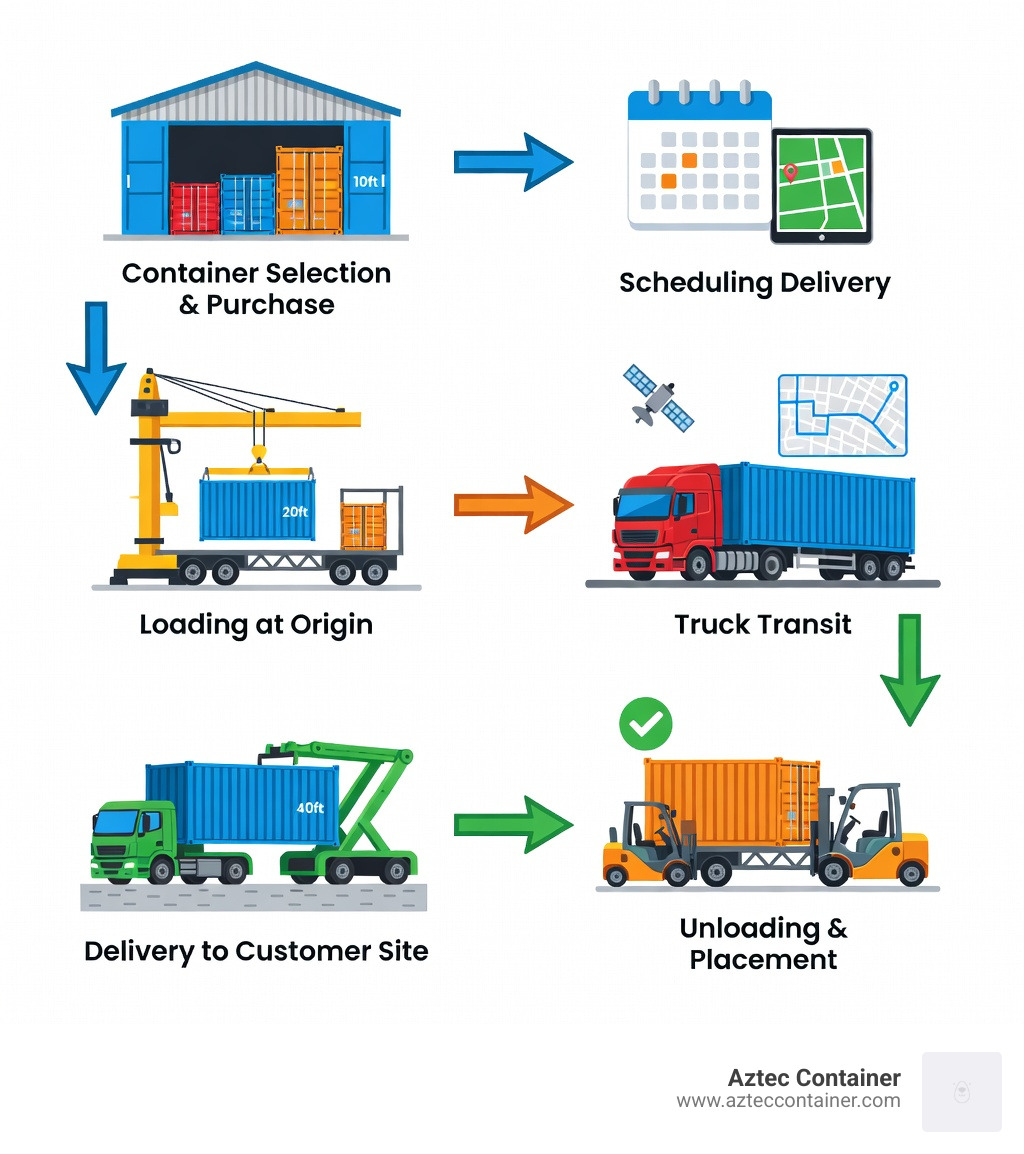
Container transport services move steel shipping containers from ports, rail terminals, or storage yards to your job site or facility. Here’s what you need to know:
Quick Overview:
- What they do: Professional trucking companies haul 10ft, 20ft, and 40ft steel containers using specialized trailers and equipment
- How it works: Containers are loaded at origin points (ports, rail yards, warehouses) and delivered door-to-door to your location
- Equipment used: Flatbed trailers, side lifters, tilt trays, and crane trucks handle different delivery scenarios
- Key services: Port drayage, intermodal connections, customs clearance, and terminal handling
- Main benefits: Secure cargo transport, real-time tracking, reduced handling damage, and flexible delivery options
Whether you’re bringing in equipment for a construction project or need secure storage delivered to your business location, getting containers from point A to point B requires the right equipment and expertise. Poor planning can mean delays, damage to your property, or containers stuck at expensive storage facilities racking up daily fees.
Modern container transport combines trucks, trains, and sometimes barges to move cargo efficiently across regions and borders. Companies use specialized chassis that lock containers in place, side lifters that can place units in tight spaces, and crane trucks for sites without loading docks. The best providers offer web-based tracking so you always know where your container is and when it will arrive.
I’m Steve Hyndman, and over my 30 years with Aztec Container, I’ve coordinated thousands of container deliveries across North America, helping businesses navigate the logistics of getting steel storage units where they need to be. Container transport services are essential to our operation, ensuring customers receive their 10ft, 20ft, and 40ft steel containers safely and on schedule.
Container transport services helpful reading:
Understanding Professional Container Transport Services
When we talk about container transport services, we are diving into a world governed by precision and standardization. At the heart of this industry are ISO standards—international specifications that ensure a container loaded in California will fit perfectly on a truck in Texas or a train in Montana. These standards are what allow the global supply chain to function like a well-oiled machine.
The most common units we handle are 20ft and 40ft containers. A 20ft unit is often the “goldilocks” size for many businesses—large enough to hold a significant amount of inventory or equipment, yet compact enough to fit into tighter job sites. For those with massive storage needs, the 40ft container is the industry workhorse. We also frequently work with “high cube” units, which offer an extra foot of vertical space, and specialized reefer (refrigerated) containers for temperature-sensitive cargo.
Safety is paramount in our industry. Every move must adhere to strict guidelines, such as those outlined in Transport Canada’s safety regulations, which dictate weight limits and securing protocols to ensure highway safety. Whether we are moving a unit through the deserts of Arizona or the mountains of Colorado, compliance with these laws ensures your container arrives without incident.
How Container Transport Services Work
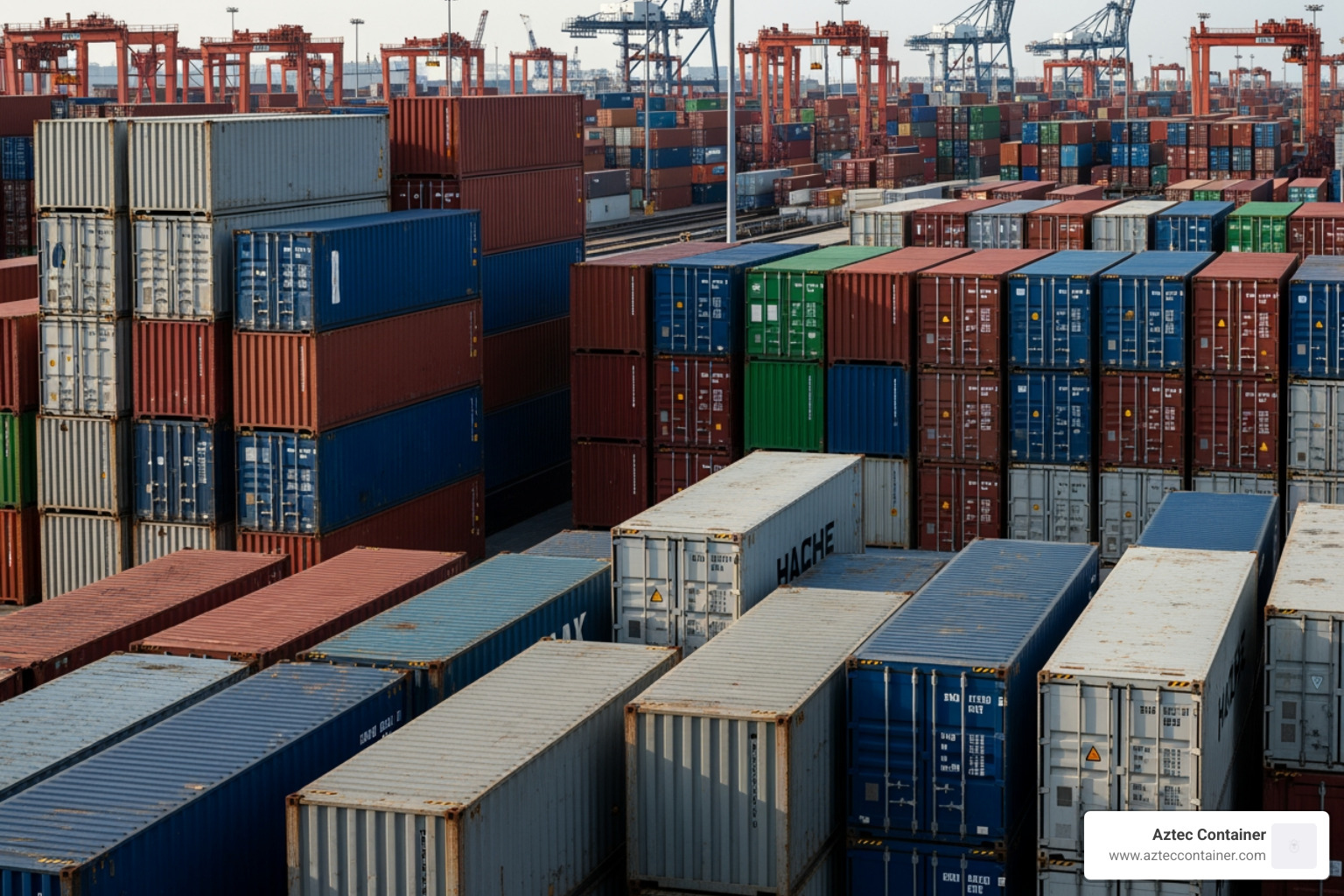
The process often begins with “drayage.” This is a fancy industry term for the short-haul transport of a container from a port or rail terminal to its next destination. Imagine a container arriving at a port; it needs to be “drayed” to a warehouse or a local customer.
From there, the journey might involve intermodal transport—using multiple modes of transit like rail and truck. We coordinate the terminal handling and loading protocols to ensure the transition is seamless. Door-to-door delivery is the ultimate goal, where we take the container from the origin point and place it exactly where you need it on your property.
Types of Containers Handled
While we specialize in standard steel ISO containers, the transport network handles a variety of specialized units:
- Standard Dry Van: The ubiquitous steel box used for general storage and transport.
- Open Top: Used for heavy or bulky machinery that needs to be loaded by a crane from above.
- Flat Rack: Ideal for oversized cargo like vehicles or large pipes that don’t fit inside standard walls.
- Refrigerated Units (Reefers): Essential for the agriculture and pharmaceutical industries in states like California and Idaho.
- Double Door Containers: These feature doors at both ends, making loading and unloading much more flexible for long-term storage projects.
Key Benefits of Intermodal and Drayage Solutions
Why should you care about intermodal solutions? In a word: efficiency. By combining the long-haul power of rail with the local flexibility of trucks, we can move containers across vast distances—like from a port in California to a job site in Utah—much more effectively than using trucks alone.
Security is another major win. Once a container is sealed, it remains closed throughout its intermodal journey, significantly reducing the risk of theft or damage. Furthermore, rail transport is a champion for the environment. Did you know that rail transport can reduce emissions by up to 75% compared to long-haul trucking? This GHG minimization is becoming increasingly important for businesses looking to reduce their carbon footprint while maintaining a reliable supply chain.
Streamlining Logistics with Container Transport Services
In the old days, you’d cross your fingers and hope your container showed up. Today, we use sophisticated technology to give you peace of mind. Real-time tracking through web portals allows you to see exactly where your shipment is at any given time.
We utilize route optimization software to avoid traffic bottlenecks and ensure on-time delivery. Furthermore, electronic Proof of Delivery (POD) systems mean that as soon as our driver drops off your container in Nevada or Montana, you receive a digital confirmation. Our 24/7 customer support ensures that if a question arises at 2:00 AM, there’s a dedicated logistics agent ready to help.
The Role of Rail and Sea Freight
Rail is the backbone of nationwide container movement. By utilizing Class 1 railroads, we have access to massive flatcar capacity that can move hundreds of containers simultaneously. Multimodal connectivity ensures that the transition from a sea port to a rail terminal, and finally to a truck chassis, happens without a hitch. This system allows us to serve landlocked states like Colorado and New Mexico with the same efficiency as coastal regions.
Essential Equipment for Hauling Shipping Containers
Moving a 5,000 to 10,000-pound steel box isn’t a job for a standard pickup truck. It requires heavy-duty, specialized equipment.
| Trailer Type | Best Use Case | Key Feature |
|---|---|---|
| Container Chassis | Port and rail drayage | Lightweight and locks container in place |
| Flatbed Trailer | Standard deliveries | Versatile for 20ft and 40ft units |
| Side Lifter | Tight spaces | Can pick up and set down containers beside the truck |
| Tilt Tray | Ground-level delivery | Slides the container off the back onto the ground |
| Lowboy | Over-height loads | Sits lower to the ground to clear bridges |
Specialized Trailers for Heavy Loads
For particularly heavy or specialized loads, we use Landoll or Lowboy trailers. These are designed with specific weight distribution in mind to meet strict axle requirements on highways in states like Texas and Idaho. Gooseneck chassis are also popular because they provide a lower center of gravity, making the transport of high-cube containers much safer under low-clearance overpasses.
Loading and Unloading Safety
Safety doesn’t stop once the truck reaches your site. We have to ensure the surface has the proper load capacity—a fully loaded 40ft container can weigh upwards of 60,000 pounds! Our drivers follow strict tie-down procedures and site clearance checks to ensure no overhead wires or trees interfere with the placement. If your site doesn’t have a loading dock, we might utilize crane hire or “top pickers” to precisely position the unit.
Navigating Regional and Cross-Border Logistics
While we focus on the Western and Southwestern United States, the principles of logistics remain the same across borders. Moving containers between the US and Canada requires a deep understanding of customs clearance and transit permits.
Each state—from California to Montana—has its own set of highway transport laws and oversized load permits. We handle the documentation and ensure that every shipment has the necessary insurance coverage to protect your investment. Whether we are navigating the busy rail hubs of Texas or the remote routes of Idaho, our expertise in regional regulations keeps your cargo moving.
Managing Permits and Regulations
Federal safety standards are the baseline, but local regulations can vary wildly. For example, weight limits on certain bridges in Colorado might differ from those in Arizona. Our logistics team stays on top of these details, securing the necessary permits for every leg of the journey. This proactive approach prevents the costly delays that happen when a truck is sidelined by a regulatory oversight.
Frequently Asked Questions about Container Transport
What is the difference between drayage and intermodal transport?
Drayage is typically a short-distance move, often just a few miles, between a port or rail yard and a local destination. Intermodal transport is the broader process of using multiple modes (like ship, rail, and truck) to move a container over long distances. Think of drayage as the “first or last mile” of an intermodal journey.
Do I need a crane to unload my shipping container?
Not necessarily! While cranes are great for precise placement or stacking, many of our deliveries use tilt-bed trailers or side lifters. A tilt-bed allows the container to slide off the back of the truck directly onto the ground. If you have very limited space or need to place the container over a fence, then a crane might be required.
Are shipping containers water and vermin proof during transit?
Yes. Our steel ISO containers are designed to withstand the harsh conditions of the open ocean. They are manufactured to be wind and water-tight (WWT), which also makes them remarkably effective at keeping out pests and vermin. When we transport your unit, you can rest assured that the contents will stay dry and secure.
Conclusion
At Aztec Container, we pride ourselves on being more than just a container provider; we are your partners in logistics. With decades of experience and a reach that spans across California, Arizona, Colorado, Idaho, Montana, Nevada, New Mexico, Texas, and Utah, we have the local knowledge and the heavy-duty equipment to handle any challenge.
We specialize in selling high-quality steel ISO containers for everything from basic storage to custom-modified offices. While our rental services are currently exclusive to California, our sales and transport capabilities are nationwide. We don’t use third-party financing or accept credit cards, allowing us to keep our operations straightforward and our prices competitive.
If you are ready to experience the most reliable container transport services in the industry, we are here to help. Our team will work with you to choose the right container size and the most efficient delivery method for your specific site.
Get your delivery quote today and let us take the stress out of your next container move. Whether you need a single 20ft unit for a backyard project or a fleet of 40ft containers for a commercial expansion, we have the expertise to get it done right.